

June 5, 2026
Uber Eats, Deliveroo, DoorDash Commission or Your Own Commission-Free Site?
Uber Eats, Deliveroo and DoorDash put a restaurant in front of new customers fast, but the commission taken from every order slowly becomes the biggest drain on your profit. Your own commission-free online ordering site takes a little effort to set up, then lets you skip the per-order commission and keep the customer tied to you. The short answer: marketplaces are valuable for visibility and first contact, your own site is for repeat, loyal and profitable orders. Most operators use both, then gradually shift the weight toward their own channel.
In this article we compare the two approaches across five concrete topics: the real per-order cost and commission, who owns the customer data, brand and customer experience, the ability to build loyalty, and how collection and operations stay organized. The goal is not to bash marketplaces but to lay out the genuine pros and cons of each channel with realistic restaurant examples and figures. We also show, where relevant, how to build the commission-free channel with RestApp's order tickets and cloud POS, QR e-menu and delivery tools.
Throughout the comparison we use typical business scenarios like "Joe's Burgers" and "Corner Coffee" with realistic ticket sizes and commission rates. Our commission-free online ordering system guide and marketplace commission vs your own site articles, which dig deeper into the cost side, also complement this piece.
What does each channel actually solve?
Uber Eats, Deliveroo and DoorDash are marketplaces. They list your restaurant inside an app that millions of users already have open, and they route customers to you from search and campaign traffic. For someone who has never heard of you, these are powerful channels for discovery, and for a newly opened or still-unknown local business, this is the engine that brings in the first orders. The price is the commission taken from every order, campaign contribution fees and, in some cases, listing charges.

Your own commission-free site works on a different logic. The customer lands on your branded ordering site or mobile app, sees the menu on your page, and places the order through your system. There is no middleman, so there is no commission; payment comes straight to you and the customer information stays with you. In RestApp, this channel is built with the commission-free online ordering module and merges into the same system as your order tickets and cloud POS; dine-in ordering, delivery and pickup are gathered on a single screen.
The core difference here is ownership. On a marketplace the customer is the marketplace's customer and you are a supplier; on your own site the customer is your customer. Which one is right for you depends on how much new-customer flow you need and how well you can tie your existing customers to yourself. For most restaurants the right answer is to use both but bank the profit in their own channel.
The real per-order cost and commission
Marketplace commissions for restaurants usually run between 15% and 35%; once promoted listings and featured placement are added at the top end, the effective rate climbs even higher. Let's make it concrete. Joe's Burgers has an average ticket of $14 and 1,000 delivery orders a month. At a 28% commission, roughly $3.90 per order goes to the marketplace; that is about $3,900 a month, or close to $47,000 a year. At many burger spots this number is larger than the entire annual net profit, and you pay it for no extra service, simply because there is an intermediary.
On your own commission-free site the equation changes. RestApp's commission-free online ordering channel has no per-order commission; your cost is limited to a fixed software subscription plus the payment processor's fee on the online payments side (typically 1% to 2%). When that same Joe's Burgers shifts half of its 1,000 orders to its own site, the commission paid on those 500 orders drops from thousands of dollars to a few. The difference goes straight to profit.
There is an honest nuance here: we are not saying it is free to drive traffic to your own site. Moving customers to your channel through QR menus, table cards, checkout prompts, social media and a bit of advertising takes effort. But that is a one-time investment in habit; marketplace commission is a permanent tax paid over and over on every order. To run the cost math against your own order volume, check the pricing page and compare the figure with our commission-free online ordering system guide.
Who owns the customer data? The most critical difference
On a marketplace, the name, phone number, address and order history of the customer who ordered belong to the marketplace, not to you. You would not recognize a customer who has ordered from Joe's Burgers 40 times; you cannot reach them directly, send them a campaign, or remember their favorite item. When the marketplace raises commission tomorrow or pushes a competitor ahead of you, you cannot carry that customer base with you because you never held it. This is the quietest but most expensive cost of the channel.
On your own commission-free site, every order is also a customer record. Who ordered, when, what, to which address, how often; all of it accumulates in your system. RestApp's cloud reports and cloud back office side turn this data into something meaningful: your best-selling item, the customer who has gone quiet, the most profitable time slot are all in front of you. This data ownership is the real lever that breaks dependence on the marketplace.
The practical payoff of owning data shows up in repeat orders. Because Corner Coffee knows the phone number and preference of a customer who orders from its own site, it can send them a weekly filter-coffee offer; on a marketplace that customer is a stranger who must be won again each time. We also cover the detail of this difference in our marketplace commission vs your own site article.
Brand, menu and customer experience
On a marketplace your restaurant is listed side by side with hundreds of others in the same template, the same typeface. The customer browses the category, not you; a competitor is one tap away, and the decision is usually made on fastest delivery or biggest discount. The space to tell your brand, your story, your presentation quality is almost nonexistent. You are a product, and the storefront belongs to the marketplace.
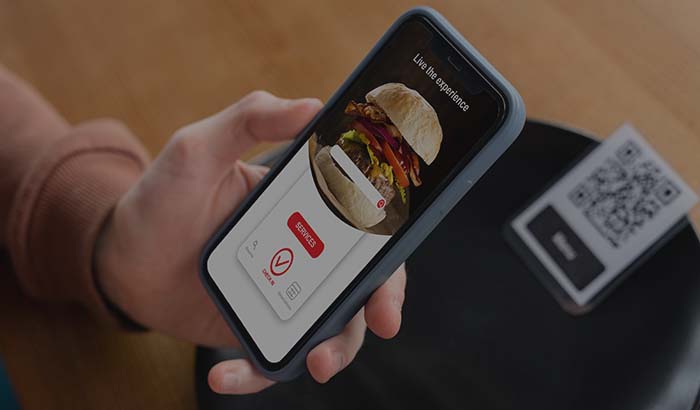
On your own site the storefront is yours. Your logo, your colors, your menu photos, your campaign layout are entirely under your control. With RestApp's digital menu and QR e-menu tools you enrich the menu with images, descriptions and suggested items, and you bring the dine-in customer into the same digital experience. Delivery zones and online reservation also sit inside the same branded flow; the customer stays in your world from start to finish.
The experience gap becomes clear with loyal customers. On a marketplace, the moment the discount ends the customer can slide to another restaurant because the bond is built on price, not the brand. On your own site, a consistent experience and a familiar interface tie the customer through habit. Using the marketplace for first contact and inviting the customer to your branded channel on the second order is the balanced path most operators follow.
Building loyalty and repeat orders
On marketplaces, loyalty is built around the marketplace, not the restaurant. The points a customer accumulates, the membership perk or the subscription belong to the marketplace; they can switch restaurants but stay loyal to the platform. As a restaurant you cannot build a loyalty program of your own, treat a customer to a dessert on their birthday, or set up a discount on the tenth order, because the marketplace stands between you and the customer.
On your own commission-free site, loyalty is directly in your hands. With RestApp's loyalty and promotions module you set up point collection, personalized coupons, first-order discounts and win-back campaigns. Corner Coffee can tell a customer who comes from its own site, "Buy 9 coffees, the 10th is on us"; that campaign ties the customer to Corner Coffee directly, not to the marketplace. Every repeat order arrives both commission-free and brand-loyal.
The math of loyalty is strong. Winning a customer back is many times cheaper than finding a new one, and marketplace commission is paid over and over each time, exactly like a new-customer cost. When you move the loyal customer to your own channel, you both escape that commission and receive more frequent orders with higher tickets. Combining loyalty with the in-table digital experience from our what is a QR menu article raises the repeat-order rate even further.
Operations, collection and kitchen flow
In a restaurant working with several marketplaces, each platform has its own tablet, its own sound and its own screen. Orders drop from different devices, staff try to track which order came from which platform, and the kitchen gets confused. On the collection side, payments come from the marketplace in bulk and with a delay; instead of seeing your daily cash flow directly, you stay tied to the platform's payment calendar.
On your own site the order drops straight into your own system and gathers inside the same order tickets and cloud POS. Orders headed to the kitchen appear in sequence and without delay on the kitchen display system (KDS); dine-in, delivery and pickup orders are managed in a single flow. With online payments, collection comes to you instantly and directly, with no waiting for a settlement. Because the whole operation is in the cloud, you can open the reports from anywhere.
The real gain of bringing all of this into one system is simplicity. You can integrate marketplace orders onto the same screen and grow your own channel alongside them, gradually shifting the weight to the commission-free side. You can plan the right POS setup with our restaurant order ticket and POS system guide and get started trying the channel with the free trial step.
Marketplace Commission vs Your Own Commission-Free Site
Uber Eats / Deliveroo / DoorDash (marketplace)
- • Typically a 15-35% commission is deducted from every order
- • Customer data (phone, address, history) belongs to the marketplace
- • The restaurant is listed in the same template as hundreds of others, the brand fades
- • Loyalty and points tie the customer to the marketplace, not the restaurant
- • Payment comes in bulk and with a delay; daily cash flow depends on the platform
- • Strong for new-customer discovery and first contact
Your own commission-free site with RestApp
- No per-order commission; a fixed subscription and a low payment-processing fee
- Customer data stays entirely with you, so you can run campaigns directly
- Your logo, your menu and your experience, entirely in your brand
- With the loyalty and promotions module you tie the customer directly to yourself
- With online payments, collection comes to you instantly and directly
- Orders are managed in a single flow across order tickets, cloud POS and the KDS
Key takeaways
- Marketplace commissions for restaurants typically run 15% to 35%; in a high-volume business this can add up to more than the annual net profit.
- Your own commission-free site has no per-order commission; cost is limited to a fixed subscription and a low payment-processing fee, and the difference goes straight to profit.
- The most critical difference is data: on a marketplace the customer belongs to the marketplace, on your own site to you; data ownership means repeat orders and campaign opportunities.
- Brand, menu experience and loyalty can only be built in your own channel; on a marketplace the bond breaks when the discount ends, while on your own site it continues through habit and loyalty.
- The right strategy is to use both together: marketplaces for first contact, your own commission-free channel with RestApp for recurring profitable orders.
Frequently asked questions
How much do Uber Eats, Deliveroo and DoorDash commissions cost?+
Commission rates for restaurants usually run between 15% and 35%; with promoted listings, featured placement and discount contributions, the effective rate can climb higher. For example, at a 28% commission on an average $14 ticket, roughly $3.90 per order goes to the marketplace. On your own commission-free site there is no per-order commission; you only pay a fixed subscription and a low payment-processing fee.
Do I have to drop marketplaces entirely?+
No. Marketplaces are valuable channels for new-customer discovery and first contact. The right approach is to use the marketplace for visibility but invite the customer to your own commission-free site from the second order onward. That way you take the new customer from the marketplace and bank the recurring, profitable orders commission-free in your own channel.
How do I drive customers to my own commission-free site?+
You move customers to your own site with the QR menu you place on the table, prompts at checkout, a card added to the delivery bag, social media and a small advertising budget. Offering a discount or loyalty points on the first order speeds up the switch. This is a one-time investment in habit; marketplace commission, by contrast, is paid again on every order.
Why is owning the customer data so important?+
When the customer's phone, preferences and order history are with you, you can send them campaigns directly, win back a customer who has gone quiet, and build a loyalty program. On a marketplace this data belongs to the marketplace; an intermediary stands between you and the customer, and even if channel conditions change you cannot carry that customer base with you.
How are orders from my own site managed in the kitchen?+
In RestApp, orders from your own site drop straight into the order ticket and cloud POS system and appear in sequence on the kitchen display system (KDS). Dine-in, delivery and pickup orders are gathered in a single flow; with online payments, collection comes to you instantly. You can also integrate marketplace orders onto the same screen and manage everything from one system.
Can't I build a loyalty program on the marketplace?+
On a marketplace, loyalty is built around the platform, not the restaurant; points and perks belong to the marketplace. On your own commission-free site, the loyalty and promotions module lets you set up point collection, personalized coupons and win-back campaigns and tie the customer directly to your own brand. That makes repeat orders both commission-free and brand-loyal.
Stop paying commission on your orders
Launch your own commission-free online ordering system with RestApp.