

June 19, 2026
Deliveroo Commission and the 0% Commission Alternative: Build Your Own Channel Alongside It
Deliveroo is one of the best known names in online food ordering. It is a strong storefront for getting in front of new customers, but the commission you pay on every order becomes the line item that stings when you look at your annual revenue. Commission in the 15-35% range per order adds up to six figures a year for a restaurant doing 1,500 orders a month. The right question here is not "should I leave Deliveroo," it is "how do I keep the storefront and build my own commission-free channel alongside it."

RestApp exists for exactly this. It does not replace the marketplace, it runs alongside it. Let Deliveroo stay as your storefront and keep bringing in new customers, while you open the same menu in a commission-free online ordering channel under your own brand. On every order that comes through your own ordering site, your iOS/Android app, and the QR e-menu at the table, 100% of the total stays with you. In this article we break down Deliveroo commission with concrete numbers and walk you step by step through the 0% commission alternative you build alongside it.
If you want a deeper look at the logic of running both channels side by side, the marketplace vs your own ordering channel article is a good place to start. For the technical integration side, you can take a look at the Deliveroo integration page.
How much is Deliveroo commission really?
Deliveroo commission is not a single fixed number. Depending on your business category, your packaging and delivery model, and the extra services you take, it varies from roughly 15% to 35% per order. Once you add in-marketplace advertising, top-placement packages, and campaign contributions, the effective cost climbs even higher. So $20 to $70 of a $200 order on the menu can stay with the marketplace.
Let's look at a concrete example. Picture a mid-sized home-style restaurant: average basket $220, 1,500 orders a month, average effective commission 25%. This business pays the marketplace 220 x 1,500 x 0.25 = $82,500 a month, roughly $990,000 a year in commission. That figure is close to the annual net profit of most restaurants.
Important note: we are not talking about shutting down Deliveroo. The storefront is valuable. The point is this: to the degree you can move part of that $990,000 commission pool into your own commission-free channel, you turn it directly into profit. You can find the detail of this calculation, line by line, in the Deliveroo commission vs your own site article.
Marketplace is the storefront, you are the channel: the right division of labor
Deliveroo's strongest side is reaching customers who have never heard of you. When someone searches "burger near me" and you show up in the list, that visibility is valuable, and paying commission for it makes sense. The problem is that it also charges you the same commission on every subsequent order from a customer who has already ordered once. But that customer now knows you, and you do not need to keep paying the marketplace to bring them back to your commission-free channel.
The right division of labor goes like this: keep Deliveroo for new customer acquisition. The first-timer tries you out. But on the second and third order, steer that customer to your own commission-free online ordering channel. When the same $220 order comes through your own site and app, $55 of commission is not deducted, the whole amount stays with you. The two channels do not eat into each other, they complement each other.
We covered why this approach works, and which type of customer to steer where, in detail in the marketplace vs your own ordering channel article. The short version: leave discovery to the marketplace and loyalty to your own channel.
What does your own commission-free channel consist of?
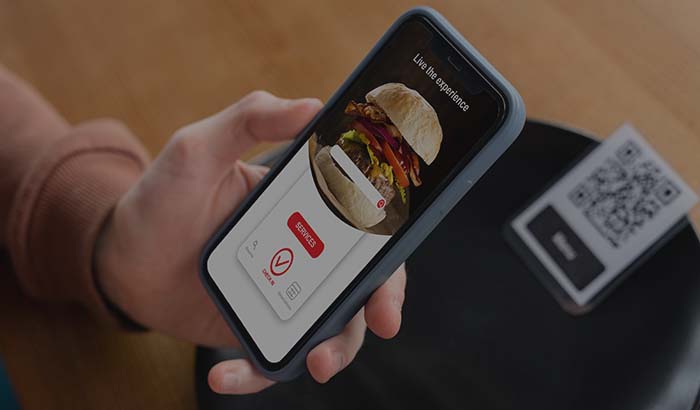
The channel you build with RestApp consists of three pillars. The first is a commission-free online ordering site and iOS/Android app under your own brand. The customer searches for your restaurant's name, lands in your own space, does not get lost among other restaurants, and does not see a competitor's ad. The second is the QR e-menu for dine-in and delivery: the customer scans the QR with their phone, sees the menu, and orders from the table or from home.
The third pillar is the kitchen and till side: with order tickets and cloud POS, incoming orders drop straight onto the ticket, the kitchen receipt prints, and your end-of-day report comes out automatically. If you want to take payment online, the online payment infrastructure completes the collection without waiting for cash at the door. On every order that comes through this channel, commission is 0%.
An important honesty note: RestApp does not aggregate orders coming from Deliveroo onto its own screen, and it does not merge two marketplaces into a single panel. RestApp is your own separate, commission-free channel. To try the setup you can start with try it free and compare the plans on the pricing page.
Who keeps the customer data? The most critical difference
When you sell on a marketplace, the customer's phone number, address, order history, and email stay with the marketplace, and you cannot access this data. That means your hands are tied when you want to run a campaign, send a birthday discount, or fire off a "we missed you" message. The marketplace always stands between you and the customer.
In your own channel, the picture flips. When a customer orders from your site or app, the data is yours. With that data you set up a loyalty and promotions program and run a loop that accumulates points, gives a discount on the second order, and wins back regulars. That direct relationship is exactly the one thing the marketplace does not give you.
The concrete payoff of owning the data is this: once a customer comes to your own channel, you can bring them back again and again without paying commission each time. If you are wondering how to build a loyalty loop from scratch, the how to set up a restaurant loyalty program article offers a practical road map.
How do you move customers from the marketplace to your own channel?
The transition happens through small touches, not by force. The most effective method is placing a QR card in the delivery box: a message like "order directly from us next time and get 10% off your first order" steers the customer to your own digital menu and ordering page. The marketplace brought you the new customer, and you invite them to your own channel with a QR card.
The second method is receipts and invoices: print your own ordering site's address and a discount code at the bottom of every receipt. The third is loyalty: give points on the second order from your own channel and set up a free drink on the fifth. The loyalty and promotions module manages these campaigns automatically, you just set the rule once.
The math of this migration is simple: every 10% of orders you shift to your own channel turns roughly $99,000 of annual commission, in the example above, directly into profit. The storefront (Deliveroo) stays in place, but your revenue gradually shifts to the commission-free channel. We gathered all the steps for moving to a commission-free system in the commission-free online ordering system guide article.
How do Deliveroo integration and RestApp work together?
On the RestApp side you do not need to shut down Deliveroo. On the Deliveroo integration page you can see how to fold the marketplace into your menu and operation flow. Frame it like this: Deliveroo is the outer storefront, and RestApp is your actual home. The two run in parallel, each bringing in its own type of customer.
In practice most businesses go like this: first they set up their own commission-free online ordering channel, prepare their menu and QR e-menu, and connect the kitchen with order tickets and cloud POS. Then, with delivery-box QR codes and receipt redirects, they slowly pull regulars to their own channel. Deliveroo does not empty out, it keeps bringing in new customers, you just rescue the commission on your loyal customers.
The fastest way to start is to open an account with try it free and set up your own ordering page; uploading your menu and creating your QR takes less than half a day. For cost planning, it is enough to compare the fixed monthly model on the pricing page against the variable marketplace commission you pay.
Deliveroo storefront and your own commission-free channel side by side
Marketplace (Deliveroo)
- • Roughly 15-35% commission per order
- • You are listed on the same page as your competitors
- • Customer phone, address, and data stay with the marketplace
- • Cost rises with advertising and top-placement packages
- • Strong storefront for new customer visibility
- • Commission is deducted from loyal customers on every order too
Your own RestApp channel
- 0% commission on orders from your own channel, 100% of the total is yours
- Site, iOS/Android app, and QR e-menu under your own brand
- Customer data is yours; you can set up loyalty and campaigns
- Fixed monthly cost, no variable commission per order
- Runs as a separate channel alongside the marketplace, not in its place
- You win back regulars with QR cards and loyalty
Key takeaways
- Deliveroo commission runs in the 15-35% per order range; for a business doing 1,500 orders a month, annual commission reaches six figures.
- RestApp does not replace the marketplace, it works alongside it: Deliveroo stays as the storefront while you build your own separate 0% commission channel under your own brand.
- On orders from your own channel (site + app + QR), 100% of the total stays with you, and the customer data is yours, not the marketplace's.
- You move regulars from the marketplace to your own commission-free channel with delivery-box QR codes, receipt redirects, and loyalty points.
- Every 10% of orders you shift to your own channel means a serious commission saving that turns directly into profit.
Frequently asked questions
What percentage is Deliveroo commission?+
Deliveroo commission is not fixed; depending on business category, delivery model, and extra services, it varies from roughly 15% to 35% per order. When in-marketplace advertising and campaign contributions are added, the effective cost climbs even higher. $20 to $70 of a $200 order can stay with the marketplace.
Is RestApp a commission-free alternative to Deliveroo?+
RestApp is not a marketplace that replaces Deliveroo. It is a separate 0% commission channel that belongs to you and runs alongside it: your own ordering site under your brand, your iOS/Android app, and your QR e-menu. Deliveroo stays as the storefront while you move regulars to your own commission-free channel.
Does RestApp aggregate my Deliveroo orders onto my own screen?+
No. RestApp does not aggregate orders coming from Deliveroo onto its own POS or screen, and it does not merge two marketplaces into a single panel. RestApp is entirely your own separate, commission-free ordering channel. Orders from your own site, app, and QR menu drop onto RestApp's order ticket system.
Do I need to shut down Deliveroo?+
No, you do not need to and we do not recommend it. Deliveroo is a valuable storefront for new customer visibility. The logic is to keep the storefront while building your own commission-free channel alongside it and gradually moving regulars to that channel. The two channels run in parallel.
How do I move customers to my own channel?+
The most effective methods are placing a QR card in the delivery box, printing your own ordering site's address and a discount code on the receipt, and giving loyalty points on orders from your own channel. The marketplace brings in the new customer; with these touches you invite them to your own commission-free channel on the second order.
Stop paying commission on your orders
Launch your own commission-free online ordering system with RestApp.