
June 10, 2026
Reducing Your Dependence on Delivery Platforms: Use the Marketplace for Visibility, Your Own Channel for Profit
Delivery platforms can be your restaurant's storefront, but they should not be your cash register. Uber Eats, Deliveroo, DoorDash and the rest take an average commission of 15 to 35 percent on every order. A restaurant running roughly $50,000 a month through a marketplace is effectively paying somewhere between $90,000 and $200,000 a year in commission. This article lays out a concrete way to reduce that dependence: use the marketplace to meet a first-time customer, then move the second order to your own commission-free channel.

First, let's clear up a common misunderstanding. What we describe here is not an 'aggregate every order onto one screen' system. RestApp does not pull marketplace orders into your panel and does not merge them. The strategy is something else entirely. The marketplace stays where it is, on its own screen, and you build a separate sales channel that runs under your own brand right next to it. Your own ordering site, app and QR menu become your turf, and the customer data stays with you there.
The logic is simple. The marketplace brings you a new customer who would have been hard to reach otherwise, and the price of that is commission. But there is no sense in paying that same commission every time the same customer orders a second, fifth or tenth time. In this article comparing a marketplace with your own ordering channel, you will see how to move repeat customers to your side step by step, how much commission you pay on each platform, and where a commission-free online ordering system fits into that equation.
How much of your revenue marketplace commission takes: the real numbers
A commission stated as a percentage sounds small. Convert it into an annual figure and the picture changes. Say a burger shop takes 1,000 orders a month through a delivery app with an average basket of $20. That works out to $20,000 in monthly revenue. If the platform charges 25 percent commission, $5,000 leaves the restaurant's pocket every month, or $60,000 a year. And that figure does not yet include service fees, campaign participation charges and card processing.
There are also rate differences between platforms. On some delivery apps the commission can range from 14 to 35 percent depending on the package, and others sit in similar bands. Newer entrants in some markets have rates that are not yet settled, so it pays to track them without overreacting. To see each platform's own commission structure with real numbers, you can look at the comparisons on the Uber Eats integration, Deliveroo integration and DoorDash integration pages.
Here is the truly frustrating part. When you pass this commission on to your prices, your menu gets more expensive on the marketplace. When you do not pass it on, your margin erodes. Both options work against you. An analysis comparing delivery app commissions with your own site shows clearly that the only way out of this squeeze is your own commission-free channel.
Why dependence is dangerous: the customer data is not yours
Commission is the visible cost. The invisible cost is data. On an order that comes through a marketplace, the customer's phone number, address, order history and preferences stay on the platform. As a restaurant, you cannot reach that customer directly. You cannot run a campaign to bring them back, send a birthday discount, or say 'it's been three weeks, we miss you.' The customer belongs to the platform, not to you.
This makes a restaurant fragile. When a platform raises its commission, pushes you down in search results, or promotes one of your competitors, you have no leverage left. The only bridge between you and the customer is that platform. When you have your own channel, the customer data sits with you, and with loyalty and promotion tools you win that customer back again and again without paying commission.
This is the essence of a multi-channel strategy. The marketplace is a billboard for new customers, and that is not a bad thing. But unless you convert the person who arrives through that billboard into someone on your own customer list, you keep paying commission on the same person month after month. The goal is not to shut down the marketplace. It is to make the customer it brings you permanent on your side.
The strategy: marketplace for visibility, your own channel for profit
The right setup has three layers. The first layer is the marketplace, and it has exactly one job: to make you visible to people who do not know you yet. It does that well, so let it. The second layer is your own branded channel, where your own ordering site, iOS/Android app and QR e-menu come into play. The third layer is the bridge: the incentive mechanism that moves the person who arrived through the marketplace over to your own channel.
Honesty matters here. RestApp does not replace the marketplace and does not collect its orders onto your screen. RestApp is a separate, 0 percent commission channel that you own, running alongside the marketplace. On an order that comes through your own channel, the full amount stays with you, with no cut going to a platform. The article commission-free online ordering for restaurants explains step by step how this channel is set up.
The math is simple. If all 1,000 of your 1,000 orders stay on the marketplace, you pay tens of thousands a year in commission. If you move only half of those orders to your own channel, the commission burden is cut in half. Moving a quarter within three months and half within six months is a realistic target. With a free trial of the commission-free channel you can test this transition without taking on risk.
Concrete ways to move repeat customers to your own channel
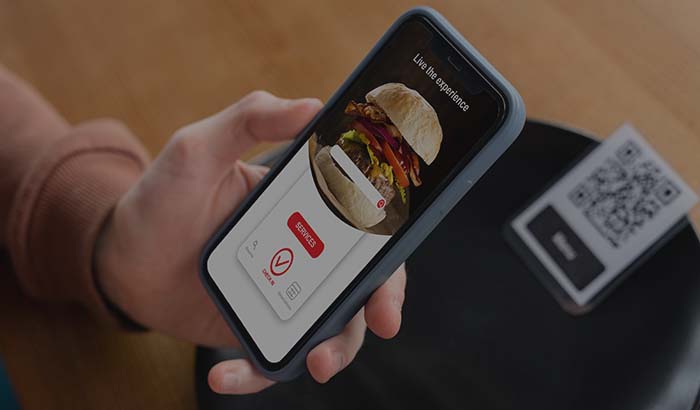
Theory is nice, but the real work is in execution. Put a small QR card in the package box you send out with a marketplace order: 'Get 10 percent off your next order when you order directly from us.' When the customer scans that QR, it takes them to your digital menu and ordering page, and the commission in between disappears. Print your own site address at the bottom of the receipt. Stick a label on the delivery bag.
The second move is the incentive. Give a clear advantage on the first order through your own channel: a free drink, free delivery, or welcome points. That small gesture, which makes a difference to the customer, costs you far less than marketplace commission. Once a customer orders through your own channel, their phone number and address now sit with you, so you can hold on to them with your loyalty program.
The third move is convenience. Ordering through your own channel should be no harder than ordering through the marketplace. With online payment integration, let the customer pay with their card in a single tap, and have your app remember their address and card details. The less friction there is, the lower the chance a repeat customer goes back to the marketplace.
The kitchen side: one operation, many channels
Many channels does not mean many jobs, if it is set up right. The marketplace order keeps dropping onto its own tablet. That does not change. The order from your own channel drops into your cloud-based order ticket and EPOS system. The kitchen runs these two flows in parallel, and staff prepare an order from your own channel exactly the way they prepare a marketplace order.
The gain here is that your own channel orders are recorded in your own POS data. Which item sells how much, which hours are busy, which customer comes back how often: those reports are in your hands on your own channel. On the marketplace, you have limited access to that data. As the order ticket and cloud POS side grows, you make menu decisions with data rather than guesswork.
Menu updates are managed from one place too. When you change an item's price on your own QR e-menu, the site and app update instantly. The printed menu, table QR and online ordering all draw from the same source. The number of channels grows without the operational load growing with it.
A 90-day transition plan and cost comparison
Plan the transition over three months, not one day. First 30 days: set up your own channel, move the menu over, connect the payment infrastructure, and print the package-box QR cards. Second 30 days: add a QR card and a receipt note to every delivery, and launch the first-order incentive. Third 30 days: start holding on to customers who arrived through your own channel with a loyalty program, and measure the rate.
The cost side surprises most restaurant owners. Marketplace commission is a percentage of your revenue. As revenue grows, the commission grows too, with no ceiling. Your own channel runs on a fixed, predictable subscription model, with no per-order commission. To see what that difference means for a restaurant paying thousands a month in commission, you can look at the real figures on the pricing page.
Here is a realistic goal: by the end of the first 90 days, move 20 to 30 percent of orders to your own commission-free channel. Even that rate cuts your annual commission burden significantly and gradually shifts customer data over to your side. To start without risk, set up your own channel with a free trial and watch the first orders come in.
Marketplace or your own channel: same customer, different outcome
Marketplace (Uber Eats / Deliveroo / DoorDash / Just Eat)
- • 15-35 percent commission per order, growing as revenue grows
- • Customer data (phone, address, history) stays on the platform and does not reach you
- • You are listed on the same page as your competitors, squeezed on price and campaigns
- • Commission, ranking and promotion rules can change one-sidedly
- • You cannot run a direct campaign or loyalty offer to a repeat customer
- • Provides a strong storefront for new-customer visibility
RestApp your own channel (site + app + QR)
- 0 percent commission per order; 100 percent of the amount stays with you
- Customer data is yours: you reach back out using phone, address and order history
- Your own brand, your own page; you are not listed alongside competitors
- Price, campaign and loyalty decisions are entirely under your control
- Managed in one operation with online payment and cloud order ticket/EPOS
- Does not replace the marketplace; it is a separate channel you own, running alongside it
Key takeaways
- Marketplace commission sits in the 15-35 percent band; at $20,000 in monthly revenue that can mean up to $60,000 a year in cost.
- RestApp does not collect or merge marketplace orders; it is a separate, 0 percent commission channel that you own, running alongside the marketplace.
- Use the marketplace for new-customer visibility; move repeat customers to your own channel with a package QR card, a receipt note and a first-order incentive.
- On your own channel the customer data (phone, address, order history) stays with you; you win them back through a loyalty program without paying commission.
- A realistic 90-day goal is moving 20 to 30 percent of orders to your own commission-free channel; even that significantly lowers your annual commission burden.
Frequently asked questions
Does RestApp collect and merge my marketplace orders onto one panel?+
No. RestApp does not pull marketplace orders (Uber Eats, Deliveroo, DoorDash and others) onto your screen, and it does not collect or merge them. RestApp is a separate, fully owned, 0 percent commission sales channel that runs alongside the marketplace: your own ordering site, mobile app and QR e-menu. The marketplace stays where it is, on its own tablet.
Do I have to shut down the marketplace completely?+
No, we do not recommend shutting it down. The marketplace makes you visible to new customers who do not know you yet, and that is valuable. The strategy is to keep the marketplace open for visibility while moving repeat customers step by step to your own commission-free channel. The two run side by side.
How do I move repeat customers to my own channel?+
Concrete methods: put a QR card in the package box that says 'get a discount on your next order,' print your own site address on the receipt, give an incentive on the first order through your own channel (a free drink, delivery or welcome points), and hold on to the customer with a loyalty program once they come over. The customer's data is now yours.
How much commission do I pay on an order through my own channel?+
There is no per-order commission on an order through your own RestApp channel; 100 percent of the amount stays with you. The system runs on a fixed, predictable subscription model. On the marketplace, every order carries a 15-35 percent commission that keeps growing as revenue grows.
Does managing many channels increase the workload in the kitchen?+
Set up right, no. The marketplace order keeps dropping onto its own tablet. The order from your own channel drops into your cloud order ticket/EPOS system, and staff prepare it in the same flow. Menu updates are made from one place; the site, app and QR menu all draw from the same source.
Stop paying commission on your orders
Launch your own commission-free online ordering system with RestApp.