
May 10, 2026
Commission-Free Online Ordering for Restaurants: Dine-In, Delivery and Pickup in One Panel
It is 8:30 in the evening. The dining room is full, the kitchen is slammed, the phone is ringing, and a delivery courier is waiting at the counter. This picture sums up the daily reality of thousands of restaurants. The real problem is not the volume, it is that most of that volume comes from marketplaces and every order leaves your pocket with a 15 to 35 percent commission attached. If you hand 20 to 25 percent of a full ticket to a platform, even your best table of the night stops turning a profit.
The fix is not to abandon the marketplace, it is to build your own channel. With an online ordering system for restaurants you can run everything from the dine-in table to delivery, pickup and the kitchen screen from a single panel, and you can keep every cent that comes through your commission-free online ordering channel in your own till. The customer orders from you, you collect the money, no middleman.
In this guide we explain, with concrete numbers, how a restaurant brings its three order types (dine-in, delivery, pickup) into one system, how the cloud POS and order ticket setup works, what the kitchen display system (KDS) does, and how loyalty brings the customer back.
How marketplace commission eats away at a restaurant's profit
Let us run the math. A restaurant with an average ticket of around $12 takes 40 delivery orders a day, half of them from a marketplace, which is 20 orders. At a 28 percent commission, each order sends roughly $3.40 to the platform. That is about $68 a day, close to $2,000 a month. This money leaves before anyone sits down, before the kitchen even fires, purely for the role of middleman.
The visibility a marketplace brings is real value, we do not deny that. But the catch is that the customer belongs to the platform, not to you. You never see their phone number, their order history, or which dish they love. On the second order you pay commission again. In our article that compares marketplace commission with your own site we break this difference down line by line.
The logic is simple: use the marketplace as a storefront to find new customers, then move the regulars to your own commission-free ordering channel. When you pay 0 percent instead of 28 percent on every repeat order, the difference goes straight to profit.
Dine-in, delivery and pickup: three order types in one panel
A restaurant's revenue does not come from a single channel. The table in the dining room, the courier at the door, the customer who walks in to collect; all three need a different flow but must be gathered in one place. RestApp's order types structure makes this possible, with the same menu, the same stock and the same reports.
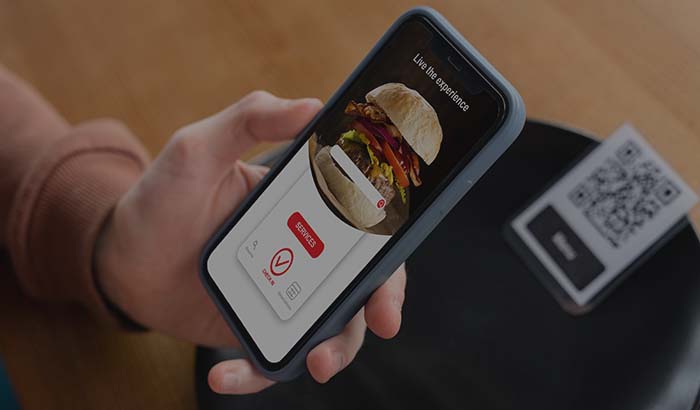
In the dining room the customer orders from a QR menu on their own phone, the server approves it, and it drops to the kitchen. This dine-in ordering flow cuts down the server's trips to the table and speeds up table turnover. Orders headed out the door are handled through the delivery flow, and walk-in collections through the pickup flow. All three appear on the same order ticket and cloud POS screen.
The practical benefit is this: at closing time you open a single report and see at a glance how many orders came from each channel, how much revenue, and which items sold. No three separate tablets, three separate notebooks, three separate tills.
Stop losing orders with a kitchen display system (KDS)
The most common loss during a busy service is a ticket going missing or being misread. When dine-in and delivery orders flow in at once, the handwritten ticket gets muddled in the kitchen and an unprepared order leaves the customer waiting. A kitchen display system (KDS) solves this at the root.
No matter which channel an order comes from, it drops directly onto the kitchen screen, color coded and in order. A prepared item is marked off, the time is tracked, and late orders move to the front. The salad station sees its own work and the grill sees its own on screen, so nothing gets mixed up. The cost of paper tickets and ink drops to zero as well.
When you combine the KDS with cloud reports you measure prep times, spot your slowest items, and plan your kitchen capacity with real data. Which hour creates a backlog, which item takes too long, all of it is in front of you in numbers.
Your commission-free online ordering channel: your own site, your own app

What replaces the marketplace is the ordering channel you open under your own brand. With RestApp an online ordering site and app is built in your restaurant's name. The customer sees your colors and your menu, you collect the money, and no middleman takes a commission.
The channel works end to end: online payments handle card and cash-on-delivery options, delivery zones let you set minimum basket and fee by neighborhood, and a digital menu gives you a storefront with photos, categories and instant updates. When the menu changes it updates with one click, no printing needed.
To prove the logic, here is an example. A home-style restaurant, call it Family Kitchen, moved 400 of its 1,200 monthly delivery orders to its own commission-free channel. The average ticket was around $11 and the old commission was 30 percent. Those 400 orders used to mean roughly $1,300 in commission a month; now it is zero. That is more than $15,000 a year in difference, and the customer data is theirs too.
Loyalty and promotions: win the customer once, bring them back many times
A customer who comes through a marketplace does not belong to you. A customer who comes through your own channel is yours; their phone, order history and favorite item are saved in the system. This is exactly where loyalty and promotions come into play.
You can set up a free item on the tenth order for a customer collecting points, a birthday discount, or a special campaign at a certain hour. You can send an automatic reminder to a customer who has not ordered in three weeks. This is impossible on a marketplace, because the customer remembers the platform, not you. Here, brand loyalty is directly in your hands.
The economics of loyalty are clear: winning a new customer costs several times more than bringing back an existing one. Every customer you win on the commission-free channel turns into real profit with their second order. Restaurants that want to keep the customer in their system also manage dining-room occupancy from the same place with online reservations.
Recipe, cost and stock: control profit on the plate
You have saved the commission, but how much profit does the plate itself leave behind? Many restaurants manage portion cost by guesswork and quietly lose money here. Recipe and cost management breaks down the cost of every item by the gram.
Each time an order sells, it is deducted from stock automatically, and the real food cost percentage shows up in the report. When the price of meat rises, you decide which item needs a price change with data rather than a guess. With the cloud back office you manage menu, price, stock and staff settings from one place, even from home.
The bottom line is that the commission-free channel protects the top of your revenue and recipe-cost control protects the bottom. When the two combine, the restaurant does not just sell more, it keeps a bigger share of what it sells. To try the system you can start for free, and you can see the plans on the pricing page.
Key takeaways
- Marketplace commission (15-35 percent) eats directly into profit on repeat orders; moving regulars to your own commission-free channel creates tens of thousands in difference per year.
- Bringing dine-in, delivery and pickup orders into one panel ends the chaos of three separate tills and notebooks and reduces it to a single report.
- A kitchen display system (KDS) prevents lost and muddled tickets and makes prep times measurable.
- With your own branded ordering site and app, customer data stays with you; loyalty and promotions bring the customer back again and again.
- Recipe-cost and stock control protect the bottom of your revenue; combined with the commission-free channel, you both sell more and profit more.
Frequently asked questions
What exactly does commission-free online ordering for a restaurant mean?+
It means the customer orders directly from you through an ordering site and app opened under your own brand, you collect the payment, and no intermediary platform takes a per-order commission. On marketplaces like Uber Eats or Deliveroo, every order carries a 15 to 35 percent commission, while on your own channel that rate is 0 percent.
Do I have to abandon marketplaces completely?+
No. The smartest approach is to use the marketplace as a storefront to find new customers, then move the regulars to your own commission-free channel. Paying no commission on the second and later orders is what lets you capture the real gain here.
How are dine-in, delivery and pickup orders managed in the same system?+
All three order types run on the same menu, the same stock and the same order-ticket screen. The dining-room customer orders from a QR menu, orders going out the door are handled through the delivery flow, and walk-in collections through the pickup flow; all of them gather in one cloud POS panel and one report.
Is a kitchen display system (KDS) really necessary?+
During a busy service, paper tickets get lost, muddled or misread. No matter which channel an order comes from, a KDS drops it onto the kitchen screen in order, tracks the prep time, and moves late orders to the front. It both lowers the error rate and brings paper cost to zero.
How can I use customer data on my own channel?+
The phone number, order history and preferences of every customer who comes through your own ordering channel stay saved in the system. With this data you can set up loyalty points, birthday discounts, win-back campaigns and personalized promotions; this is not possible on a marketplace.
Stop paying commission on your orders
Launch your own commission-free online ordering system with RestApp.