

May 30, 2026
GloriaFood Is Shutting Down: A Commission-Free Alternative and How to Move to RestApp
GloriaFood announced that it will stop service on April 30, 2027, and that left a clear question for the thousands of restaurants that built their free order widget and menu site on the tool: where do you move before your ordering channel goes dark? If you run a restaurant, cafe, or fast food spot on GloriaFood, your real worry should be not losing the habit of paying zero commission. In this article we walk through a commission-free alternative that fills GloriaFood's shoes, the concrete differences between the two systems, and how to migrate without losing any data.
The short answer is this: GloriaFood's strongest point was its free, commission-free approach to taking online orders. There is an alternative that keeps that same approach and adds order tickets, cloud POS, QR menus, and a kitchen display on top. On the commission-free online ordering side, RestApp also takes no per-order commission, just like GloriaFood. The difference is that it pulls the whole chain together in one system, from the moment an order comes in all the way to the kitchen, the courier, and accounting. So you do not just swap out a widget, you also bolt on the pieces GloriaFood never had, like order tickets and cloud POS and a QR e-menu.
Do not treat the move as a panic decision. You have until April 30, 2027, and if you plan it properly your customers will not feel a single interruption. Below you will find first why GloriaFood is closing and what it means for you, then the comparison table, then a step-by-step migration plan. If you want to try it right away, you can set up RestApp for free and stand up your own commission-free ordering site in parallel.
Why is GloriaFood closing, and what does it mean for you?
GloriaFood was a popular tool that gave restaurants a free online order widget and a simple menu site, and took no per-order commission. The company announced that the service will be discontinued as of April 30, 2027. After that date the order button, the menu page, and the management panel will stop working, which means any restaurant that has not moved somewhere by then risks losing every order coming through its own channel.
The real issue here is this: businesses using GloriaFood built their own commission-free channel to escape the commissions that marketplaces like Uber Eats and Deliveroo charge, which run anywhere from 15 to 35 percent. Take Joe's Burgers as an example. A business taking 900 delivery orders a month, with an average ticket of $14, that pays 25 percent commission on every marketplace order, hands over roughly $3,150 to the platform each month. With GloriaFood it had moved part of those orders to its own site and zeroed out the commission on them.
Once GloriaFood closes, if you do not migrate, that order traffic will most likely shift back to the marketplaces and the commission burden returns. So you should treat the move not as a 'we will look at it later' task but as a direct profit-margin protection task. A restaurant that switches to the right alternative keeps its commission-free setup. One that does not gives the margin it earned right back to the marketplace.
What should you look for in a commission-free alternative?
When choosing a GloriaFood alternative, the first criterion is of course the commission policy. What you want is a system that, like GloriaFood, takes no cut per order and charges a fixed or package-based fee instead. When you review the pricing structure, get a clear answer to the question 'is this a monthly subscription or a per-order commission,' because as your volume grows, commission-based models quietly inflate your costs.
The second criterion is covering the gaps GloriaFood left open. GloriaFood was a good order-taking tool, but it did not manage the order hitting the kitchen, the dine-in ticket, inventory, or cost. Your new system should not just take orders. It should push the order straight to the kitchen through a kitchen display system (KDS), take orders from the table through a QR menu, and show your day's revenue on a single screen with cloud reports at the end of the day.
The third criterion is portability and local support. Moving your menu items, photos, and delivery zones to the new system should be easy, and the support team should work with your local payment infrastructure. A global structure can sometimes be limited on the local payment and invoicing side, so an alternative with strong local support has an advantage here.
What does RestApp do differently?

RestApp keeps GloriaFood's commission-free approach and adds the operational layer that was missing on top of it. You set up your own branded commission-free ordering site and mobile app. The customer orders directly from you, with no marketplace commission in between. Instead of a widget like GloriaFood's, you get a channel that runs end to end under your own domain.
The real difference shows up in what happens after the order is placed. In RestApp, an incoming order lands on the kitchen display and is posted to the cloud POS and order ticket side at the same time. A business like Corner Coffee can see the order a customer placed at the table through QR alongside the one that came in for delivery, all in one order-ticket system. Courier assignment, delivery zones, and online payments all live inside the same structure. With GloriaFood, most of these needed separate tools.
On top of that, RestApp brings pieces that never existed in GloriaFood: bringing customers back with loyalty and promotions, recipe and cost tracking, online reservations, and order tickets on a tablet in the server's hand through the order-taking app. So you are not replacing an order widget, you are pulling the restaurant's entire digital operation into one system.
Moving from GloriaFood to RestApp: step by step
Do not try to do the move in a single day. A parallel setup is the safest method. First, try RestApp for free to open your account and prepare your new system in the background while GloriaFood is still running. That way, when April 30, 2027 arrives, you go live with a tested channel rather than in a rush.
The second step is migrating the menu. Move the categories, products, variations, and prices from your GloriaFood panel into RestApp's digital menu structure. This stage is a good chance to review and update your product photos and descriptions. At the same time, redefine your delivery zones and minimum basket amounts to match your GloriaFood settings.
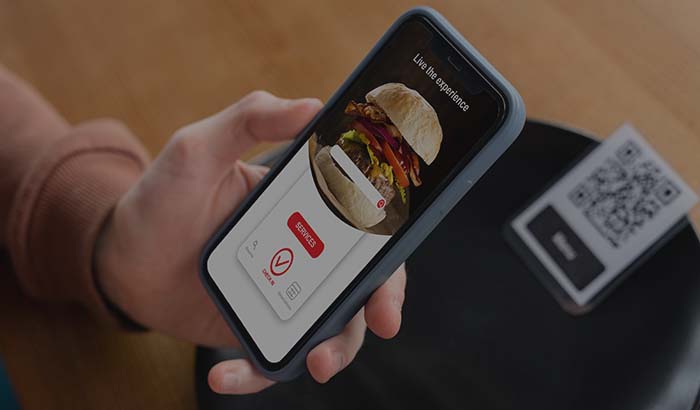
The third step is redirecting and announcing. Point the 'order now' links on your site and social media to your new RestApp ordering page, and reprint your QR menu codes on the QR e-menu side. Tell your regulars about your new ordering channel with a short message. If you keep both channels open until GloriaFood's closing date, no order is left hanging.
Cost comparison: how much does returning to a commission channel cost?
The hidden cost of delaying the move is that order traffic shifts to the marketplaces after the shutdown. Back to the Joe's Burgers example: out of 900 monthly orders, it took 350 through its own commission-free channel with GloriaFood. Those 350 orders, at an average ticket of $14, mean roughly $4,900 in monthly revenue. If it goes back to the marketplace, 25 percent commission sends about $1,225 of that revenue to the platform every month.
On the RestApp side, the model is not commission but a fixed package fee. So as your order count rises, your cost does not pile up the way a marketplace does. Whether it is 350 orders or 900, they all flow commission-free under the same subscription. The gap between the two more than pays for the system within a few months. On top of that, the separate tools you paid for order tickets, KDS, and reporting all roll into a single bill.
If you want to run the numbers for your own business, you can use the calculation logic in the marketplace commission vs your own site article, which compares marketplace commission with your own channel. The general rule is clear: once your monthly order volume crosses a certain threshold, your own commission-free channel always comes out cheaper.
Common mistakes during the migration
The most common mistake is leaving the move until the closing date. A restaurant trying to migrate a few days before April 30, 2027 cannot find time for menu transfer and testing, and ends up losing orders that week. The right move is to set up the new channel months ahead, run it in parallel, and ease customers onto it gradually.
The second mistake is moving only the order widget and leaving the rest of the operation as it was. GloriaFood only took orders anyway, so the migration is a chance to tidy up the kitchen and order-ticket side too. If you switch without pushing orders to the kitchen display and tying the table to the cloud POS order ticket, you are not using the alternative's real value.
The third mistake is not telling customers. When the order link changes, a customer who saved the old GloriaFood link lands on a blank page. Announce the new channel clearly through social media, messaging apps, and the QR codes on your tables. For setup specific to your segment, the sample flows on the restaurants or fast food pages will point the way.
GloriaFood vs RestApp: Commission-Free Ordering Comparison
GloriaFood (closing on April 30, 2027)
- • Offered a free, commission-free order widget
- • All service stops on April 30, 2027, so migrating is a must
- • Takes orders only; no order tickets or POS
- • No kitchen display system (KDS) or dine-in order ticket
- • No inventory, recipe, cost, or loyalty tracking
- • Global structure; local payment and support could be limited
RestApp (commission-free)
- Your own branded commission-free ordering site and mobile app
- Continuous service; fixed package fee, no per-order commission
- Orders, order tickets, and cloud POS merge into one system
- Orders land directly on the kitchen display system (KDS)
- QR menu, dine-in ordering, couriers, and delivery zones included
- Loyalty, inventory-recipe-cost, and local support
Key takeaways
- GloriaFood stops service on April 30, 2027. Restaurants that do not migrate by then lose their own commission-free ordering channel and its traffic.
- GloriaFood's most valuable trait was that it took no per-order commission. When choosing an alternative, the first criterion is keeping that same commission-free approach.
- RestApp keeps GloriaFood's commission-free ordering approach and adds order tickets, cloud POS, QR menus, and a kitchen display, pulling the operation into one system.
- The safest migration is a parallel setup: open the new channel months ahead, test it, and keep both channels open until GloriaFood closes.
- The real cost of delaying the move is order traffic shifting back to marketplaces that charge 15 to 35 percent commission.
Frequently asked questions
When is GloriaFood shutting down?+
GloriaFood announced that it will end its service on April 30, 2027. After that date the order widget, menu page, and management panel will stop working, so you need to move to another system before then.
What is the closest commission-free alternative to GloriaFood?+
RestApp is an alternative that keeps GloriaFood's commission-free online ordering approach. It takes no per-order commission, works on a fixed package fee, and adds the pieces GloriaFood never had, like order tickets, cloud POS, QR menus, and a kitchen display.
Can I move my GloriaFood menu to RestApp?+
Yes. You can transfer your categories, products, variations, prices, and delivery zone details into RestApp's digital menu structure. Doing the move in parallel while GloriaFood is still running is the safest way to migrate without losing a single order.
Will I lose orders during the migration?+
If you plan it well, no. If you set up your new RestApp channel months ahead and keep both channels open until GloriaFood closes, customers feel no interruption. The real risk is leaving the move to the last day and not finding time for testing and announcements.
Does RestApp also work commission-free like GloriaFood?+
Yes. RestApp takes no per-order commission on your own branded ordering channel. Pricing runs on a fixed package subscription. That way, as your order volume grows, your cost does not pile up the way marketplace commissions do.
Why should I keep my own channel instead of returning to a marketplace?+
Marketplaces like Uber Eats and Deliveroo charge 15 to 35 percent commission per order. With GloriaFood you had escaped that commission. If you keep your own commission-free channel running with RestApp, you protect the same margin and do not hand your earnings back to the platform.
Stop paying commission on your orders
Launch your own commission-free online ordering system with RestApp.