

April 16, 2026
Online Ordering for Beach Clubs: Fast Service from Sunbed and Table with QR
A July afternoon. All 180 sunbeds are full, the pool deck sits 80 meters from the shoreline, half your servers are running to take orders and the other half shuttle between the kitchen and the service area. A guest has been raising a hand for an hour and nobody notices. Eventually they get up, walk to the bar, wait in line, get worn down by the heat, and never order that third cocktail they would have added to their tab. This is exactly where a beach club operator loses money over the summer: not in service, but in the order that never gets placed.
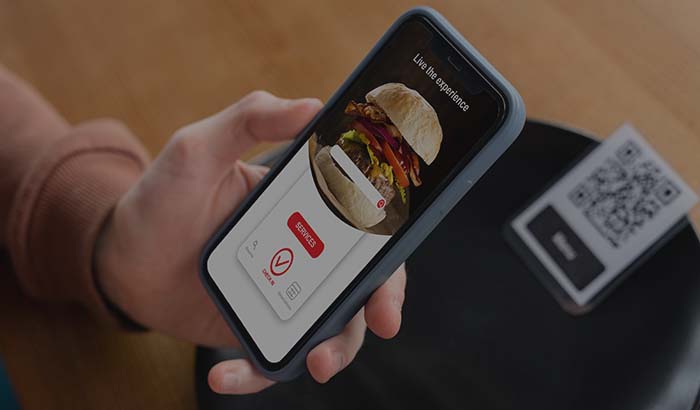
Online ordering for beach clubs exists to close that gap. The guest scans a QR code stuck to the arm of the sunbed or to the table, sees the menu on their phone, picks a drink and a snack, types in their sunbed number, and pays by card if they want. The order drops straight to the kitchen display system (KDS) and to the bar. Instead of running around, the server simply delivers what is ready. The whole flow is managed from a single panel through the beach club online ordering system.
Most important of all: this channel is yours. You do not pay marketplaces like Uber Eats or Deliveroo a commission of 15 to 35 percent per order. The guest is already on your premises, moving between your tables and loungers; there is no logic in handing a middleman a cut to sell to them through your own commission-free online ordering channel. The season is short and revenue is dense, so every percentage point stays in your pocket.
The real problem at a beach club: not service, but the order that never gets placed
At a beach club, the table layout is not fixed the way it is in a restaurant. A guest stays on the same sunbed all day, but with 60 to 200 sunbeds, a pool, a bar, a restaurant section, and cabanas, it takes a server minutes just to physically reach them. On a busy day, if one server covers 25 sunbeds, the average wait for a guest to place a second drink order runs past 10 minutes. In that window the guest gives up, dozes off, or goes for a swim. Every order left unspoken is a tab that never grows.
An average beach club guest stays on site 4 to 7 hours a day. That is 5 to 10 times longer than a restaurant guest. So the potential to grow the basket is enormous: extra drinks, a second meal, snacks, ice cream, coffee. But that potential is only realized if ordering is easy. If the guest has to raise a hand and wait 10 minutes every single time, they will place 3 orders a day instead of 7.
QR-based dine-in (sunbed) ordering flips this equation. The guest orders whenever the urge hits, as many times as they want. The server's physical capacity is no longer the ceiling. A 150-sunbed beach club on the Mediterranean coast saw average daily spend per guest rise by roughly 40 percent after switching to QR ordering; the difference was simply the orders that used to go unplaced now getting placed.
How QR ordering from the sunbed and table works
A unique QR code carrying that spot's number is stuck to each sunbed, cabana, and table. When the guest scans the code with their phone camera, no app download is needed; they order from the digital menu that opens in the browser. Because the location is embedded in the QR code, the order is automatically tagged as 'Sunbed 47' or 'Pool Table 12.' The server does not have to hunt for the spot, it is written on the screen.

The menu is visual and categorized. Cold drinks, cocktails, appetizers, mains, and desserts are listed separately; each item shows a photo, a description, and a price. When something runs out, the item is deactivated with one tap, and the guest never even sees the sold-out mojito. Every menu update happens instantly from the cloud back office; a mid-season price increase or a new item takes minutes to add.
The guest can pay by card instantly or add to the tab and settle it all on the way out. The online payments integration also lets tips be collected digitally. At the end of the day the report makes it clear how much each sunbed spent, how many of each item sold, and which hours were busiest.
A commission-free channel: your own site instead of a marketplace
The beach club guest is already inside. There is no reason to take their order through a marketplace like Uber Eats or Deliveroo; those platforms exist to bring in customers from outside, not to skim a commission off a sale that already belongs to you. Yet many venues still link their QR menu to a marketplace and give away 15 to 35 percent on every sunbed order. That is gifting money off the table to a middleman.
RestApp's commission-free online ordering channel runs under your own brand, your own domain, and your own menu. The guest sees your logo, your promotions, and the payment goes straight to you. An example: a 200-sunbed beach club takes an average of 900 orders a day in season, with an average order around 25 dollars. At a 20 percent marketplace commission, that revenue loses roughly 4,500 dollars a day; across a 90-day season, around 400,000 dollars. In your own commission-free channel, that money stays entirely with the venue.
If you want to dig into the commission logic in depth, the article marketplace commission vs. your own site makes the comparison of the numbers clear. The guide to building a commission-free online ordering system walks you through setting up the channel from scratch, step by step.
A kitchen and bar flow built to withstand peak season
Volume at a beach club comes in waves: between 1 and 3 PM the bar and kitchen can see 200 orders at once. Managing that load with paper tickets or a server's verbal relay is impossible. When the order comes in via QR, it drops separately to the kitchen display system (KDS) and to the bar's screen. Drinks to the bar, food to the kitchen; nothing gets mixed up, no paper goes missing, and the 'who took this order' argument is over.
As the kitchen and bar prepare each order, they update its status on the screen. The server sees on their phone or terminal which order is ready and only picks up and delivers what is done. The pointless round trip to the kitchen to ask 'is it ready' disappears. The order ticket and cloud POS keep this whole flow in one system; the end-of-day register, the item sales breakdown, and server performance come out automatically.
Knowing the true cost of a drink and a dish is at the heart of beach club profitability. When a cocktail's contents are defined down to the grams of spirits, fruit, ice, and garnish, recipe and cost management shows exactly what you earn on that item. At the end of the season there is no 'we sold a lot but no money was left' surprise; which item brings profit and which only inflates revenue is clear from the start.
Extending the season with reservations, loyalty, and pickup
At a beach club the most valuable resource is the sunbed, and on weekends it is limited. With online reservation the guest books their sunbed in advance, and you know your occupancy ahead of time. That lets you plan capacity, schedule staff accordingly, and cut no-show losses by taking a deposit. A minimum spend package can also be defined at the time of booking.
The season is short, but guest loyalty can last. With a loyalty and promotions module, a guest who earns points on every order picks your venue again the following week. Campaigns like 'free sunbed on your fifth visit' or 'fifth cocktail on the house' tie the customer to you rather than to a marketplace. End-of-season data becomes your CRM list for the winter.
For customers who do not use the beach and come only to eat, pickup ordering and delivery to nearby villas extend the season. By defining delivery zones you clarify how far you will deliver and how you will manage couriers. That way you generate revenue beyond the venue's physical capacity.
Getting started with RestApp at your beach club
Setup is fast enough to make the season. You upload your menu with its images, generate QR codes based on your sunbed and table plan, define the bar and kitchen screens, and switch on the payment integration. Within a few days the whole venue is taking QR orders. With a separate order-taking app for staff, the server can also enter orders from their handheld device; the QR and server channels merge into the same ticket.
To see the numbers before you decide, you can check the pricing page and try it for free with no commitment. Setting it up at the start of the season and testing it over a single busy weekend shows concretely how the system changes per-guest spend and service speed.
A beach club lives out all the complexity of a restaurant outdoors and under fluctuating demand. The restaurant digitalization guide gives the general framework; but the beach club online ordering solution, which manages the beach-club-specific flow from one panel, lets you keep every minute and every order in your pocket where the season is short.
Key takeaways
- At a beach club the real loss is not in service but in the order the guest never places because they cannot reach a server; QR ordering removes that ceiling.
- Guests stay 4 to 7 hours a day; easy ordering from the sunbed markedly grows per-guest spend (around 40 percent in the example).
- The guest is already inside; instead of paying a 15 to 35 percent marketplace commission, sell through your own commission-free channel and keep the money at the venue.
- Orders drop to separate KDS screens for the bar and the kitchen; even at 200 simultaneous orders in peak hours, there is no mix-up and no lost paper.
- Online reservation, loyalty, pickup, and delivery extend the short season and let you plan occupancy in advance.
Frequently asked questions
Does a guest have to download an app to use QR ordering at a beach club?+
No. The guest scans the QR code stuck to the sunbed or table with their phone camera, and the menu opens directly in the browser. No app, membership, or setup is required; they place an order within seconds.
How does the order show which sunbed it came from?+
Each QR code carries the number of the spot it belongs to. When the guest scans the code, the order is automatically tagged as 'Sunbed 47' or 'Pool Table 12,' the server sees it on screen, and delivers to the correct spot.
How do I get rid of marketplace commission?+
RestApp sets up a commission-free online ordering channel that runs under your own brand and your own domain. With the guest already on your premises, there is no reason to give a marketplace a cut; payment goes straight to you, and you do not pay a 15 to 35 percent commission per order.
Do hundreds of simultaneous orders at peak hours strain the system?+
No. Orders are routed automatically to separate KDS screens, the bar for drinks and the kitchen for food. No paper ticket goes missing, no verbal relay gets muddled; each section sees only its own queue and updates the status as items are prepared.
Does it only work during the beach season?+
No. With online reservation you plan occupancy in advance, with the loyalty module you win the guest back, and with pickup and delivery you sell beyond the venue too. These channels extend the season and build up customer data for the winter.
Stop paying commission on your orders
Launch your own commission-free online ordering system with RestApp.