

May 1, 2026
Online Ordering System for Pizzerias: A Guide to Topping Customization, Delivery Zones and Promotions
A pizzeria usually loses its profit in the last three feet. You stretched the dough, weighed the toppings, fired the oven to 600 degrees, sent the driver on the road. Then the marketplace skimmed somewhere between 15 and 35 percent off that order. On a loaded pizza, that can mean a third of the price walking out the door before you ever see it. On low-cost items like a Margherita, the commission often eats the entire net profit.
The fix is not to drop the order, it is to diversify the channel that order comes through. When you have a commission-free online ordering website and app under your own brand, the only cost you pay on that same pizza is your payment processing fee. Two details that matter most in the pizza business, topping customization and delivery zones, are always half-baked inside a marketplace interface. On your own channel you keep full control. RestApp builds this channel specifically for pizzerias: on the online pizza ordering system page, the logic for crust, size and extra toppings comes ready out of the box.
This guide focuses on three things. How the customer designs their pizza on screen, which neighborhood you deliver to with what minimum order and what delivery time, and how you run a second-pizza-free promotion without paying any commission. Alongside it, with a QR e-menu and order tickets and cloud POS, you gather your dine-in, delivery and pickup orders into a single panel.
The real pain for a pizzeria: commission and missing customization
Pizza has a high unit price but also a high ingredient cost. A loaded pizza recipe runs up cost minute by minute through mozzarella, pepperoni, mushrooms, peppers, corn and sauce. Once a marketplace commission lands on top of that cost, an order that looks profitable can actually turn into a loss. For a pizzeria taking 1,200 orders a month at an average ticket of around 10 dollars, a 25 percent commission means a sizable share of revenue leaving the business every month. For most pizzerias that figure is close to their combined rent and payroll.
The second pain is invisible but it hits revenue directly. On marketplace menus, topping customization usually ends up as a single line of free text. The customer asks for less sauce, the driver relays it to the kitchen too late, the order comes out wrong. Options like half pepperoni half veggie, extra cheese or thin crust do not fit into a standard notes field. Every wrong order turns the driver back and throws the dough in the trash.
On your own channel both problems are solved. The commission disappears and customization enters the screen structurally. RestApp's commission-free online ordering infrastructure delivers both gains at once: the customer builds their pizza step by step, and you collect the full net amount.
Topping customization: let the customer build the pizza on screen

Customization is the heart of a pizza order. A well-built digital menu first asks the customer for size, then crust type, then offers extra toppings and toppings to remove. When someone who picked a medium loaded pizza adds extra mozzarella, the price updates instantly, and when they ask for half jalapeno that choice is written clearly onto the order line. This structure both reduces wrong orders and raises the average basket value. Extra cheese alone adds a meaningful amount to a single pizza.
Customization helps not only on the customer side but in the kitchen too. When the order drops onto the kitchen display system (KDS) topping by topping, the cook sees clearly on screen what to add and what to leave out. A half-pepperoni half-mushroom pizza shows up as two zones without any notes confusion. When the order is ready, the status moves forward automatically and the driver does not wait around for nothing.
Topping and portion decisions are also cost decisions. With recipe and cost management you know the gram-level cost of every pizza, and you set the selling price of an extra topping right on top of its cost. That way customization is not a source of error but an extra line of profit.
Delivery zones: which neighborhood, how many minutes, what minimum order
The quality of a pizza depends on how fast it reaches the door. A pizza that arrives in 25 minutes is hot, one that arrives in 50 minutes is cold. So drawing the delivery zone correctly is a direct quality decision for a pizzeria. RestApp's delivery zones feature lets you define areas on the map neighborhood by neighborhood. You set a low minimum and free delivery for the near zone, and a higher minimum plus a delivery fee for the far zone.
Zone-based setup also protects the driver. Sending a single pizza to a far-off address is a loss once you factor in driver time and fuel. When you set the minimum order higher for the far zone and add a delivery fee, you work profitably and keep delivery time manageable. When the customer enters their address, the system sees which zone they are in and applies the minimum order and delivery fee automatically.
Beyond delivery, a pickup option for nearby customers brings in revenue too. A customer who chooses pickup ordering is not charged a delivery fee, and you avoid the driver cost. For pizzerias, managing all order types from a single menu, including delivery and pickup, simplifies operations.
Promotions and loyalty: second pizza free, commission-free
The pizza business runs on promotions. Buy two get one, second pizza half price, free drink over a certain order value, these setups lift orders. The problem is that when you run a promotion on a marketplace, you pay for the discount while the commission is still skimmed off the full revenue. In other words you finance both the discount and the commission. On your own channel, promotion design belongs entirely to you through the loyalty and promotions module, with no commission stacked on top.
The loyalty side is especially valuable for a pizzeria because pizza is a high-repeat product. If the same family orders every Friday, a points system that makes the tenth pizza free keeps that customer away from the marketplace. When the customer is recognized by their phone number, repeating a past order becomes a single tap, which also speeds up the basket. A marketplace will not tell you who the customer is, your own channel will.
To measure the return on promotions, with cloud reports you see which promotion brought in how many orders and at what time it peaked. You know in numbers how the second-pizza-half-price promotion multiplies revenue on a Friday night, so you are not discounting blindly.
One panel: dine-in, delivery and pickup in the same place
In many pizzerias the dining room runs separately, phone orders separately, the marketplace separately. Three different channels, three different stocks, a register that does not reconcile at the end of the night. RestApp's order tickets and cloud POS system gathers the dine-in ticket, the online order and pickup onto a single screen. The pizza for the customer at the table and the pizza headed for the door both drop onto the same kitchen screen and land in the same report.
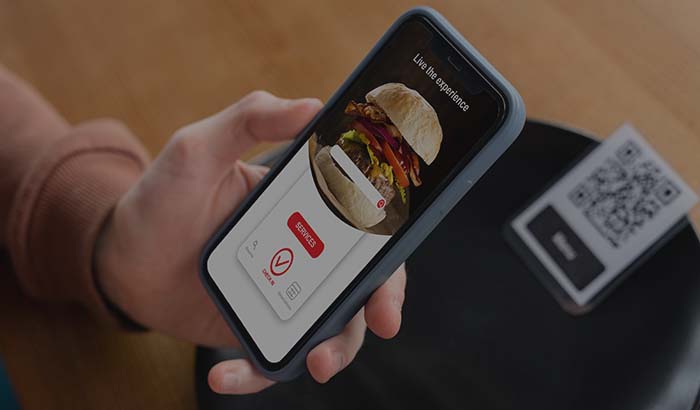
For the customer seated in the dining room, dine-in ordering opens an order through a QR code stuck to the table. The server does not run to every table, and the kitchen receives the order instantly. This visibly speeds up service on a busy Friday night. For phone orders, the order-taking app lets staff enter the order quickly and attach it to the correct ticket.
Gathering all channels in one place also makes the back office easier. Through the cloud back office, a menu update, a price change or a promotion launch reflects across all channels at once. When a mozzarella price increase comes in, you update the price from a single screen and both the dining room and online are current at the same moment.
A concrete example: Bella Napoli's 12-month transformation
Bella Napoli, a pizzeria taking roughly 1,500 orders a month in a busy city district, was receiving all of its orders through two large marketplaces. The average ticket was about 9 dollars and the average commission was 26 percent. That meant a large share of monthly revenue leaving the business. The owner first digitized the QR and dine-in side with a QR e-menu, then launched a commission-free online ordering website and app under their own brand.
In the first three months, roughly 35 percent of existing customers signed up to the owned channel, driven by QR cards placed on tables, a discount code on the receipt and a second-pizza-half-price promotion. By the sixth month, 48 percent of online orders were coming through the owned channel. On those orders the commission was only the payment processing fee, around 2 percent. The 24-point gap between the two meant significant monthly savings.
By the end of the twelfth month, Bella Napoli did not drop the marketplace entirely; it used the marketplace as a channel for finding new customers and its own site as the channel for loyal ones. The share of customers returning through loyalty points rose, and because the delivery zone was tightened, the average delivery time dropped from 41 minutes to 29 minutes. The commission was not the only thing the pizzeria gained; customer data, speed and promotion control were now its own as well.
Key takeaways
- Marketplace commission (15-35 percent) eats most of the net profit on a high-cost product like pizza; on your own commission-free channel the only cost left is the payment processing fee.
- Topping customization gets squeezed into a notes line on a marketplace; on your own digital menu, size, crust and extra toppings are selected structurally, wrong orders drop and the basket grows.
- Drawing the delivery zone neighborhood by neighborhood and setting a separate minimum order and delivery fee for each zone both gets the pizza there hot and protects the driver from unprofitable runs.
- Promotions and loyalty run commission-free on your own channel; setups like second pizza half price lift revenue while the customer data stays with you.
- Gathering dine-in, delivery and pickup orders into a single panel simplifies stock, register and kitchen flow; a menu update reflects across all channels at the same time.
Frequently asked questions
Is commission-free online ordering for a pizzeria really commission-free?+
No marketplace-style per-order commission is taken. On orders coming through your own branded site and app, the only variable cost, if you take card payments, is the fee your payment provider charges, which is usually around 2 percent. Compared with a marketplace's 15-35 percent commission, the difference flows straight into net profit on a high-cost product like pizza.
How does the customer customize their pizza topping by topping?+
In the digital menu, size comes first, then crust type, then the toppings they can add and remove are offered step by step. Each choice, like extra mozzarella or removed onions, updates the price instantly and is written clearly onto the order line. Because these choices also drop onto the kitchen screen separately, the chance of a wrong pizza going out drops considerably.
Can I set different delivery rules for different neighborhoods?+
Yes. With the delivery zones feature you draw areas on the map and define a separate minimum order, delivery fee and estimated time for each zone. By setting a low minimum and free delivery for the near zone and a high minimum plus delivery fee for the far zone, you both get the pizza there hot and prevent unprofitable runs.
Do I have to drop the marketplace entirely?+
No. For most pizzerias the healthiest setup is to use both together. You position the marketplace as a channel for finding new customers and your own commission-free site as the channel for loyal, repeat customers. You move existing customers to your own channel gradually with QR cards, a discount code on the receipt and a loyalty promotion.
Can I also gather dine-in, delivery and phone orders in the same system?+
Yes. The order tickets and cloud POS system gathers the dine-in ticket, the online order, pickup and the phone order onto a single screen. They all drop onto the same kitchen screen, land in the same report and stock is tracked from one place. A menu or price update reflects across all channels at the same time.
Stop paying commission on your orders
Launch your own commission-free online ordering system with RestApp.