

April 28, 2026
Online Ordering System for Burger Joints: Combos, Speed, and Loyalty
It is 8:30 PM and a party of four wants extra cheese, loaded fries, and combos with drinks, all at once. The order from the delivery app, the phone order for pickup, the dine-in ticket at the table, and the pickup queue all stack on top of each other. In a burger business the profit hides in speed: the longer the patty sits, the more it dries out, and the longer a customer waits, the less likely they are to come back. But the real leak is not in the kitchen, it is in the marketplace commission. If you are paying up to a third of an $18 combo in commission, your best-selling item turns into your least profitable one.
The fix is to take the order from your own channel instead of someone else's app. With RestApp you set up a 0% commission commission-free online ordering website and app under your own brand. That same order flows into your cloud POS and order ticket system, and from there onto the kitchen display system (KDS). Speed and consistency are everything in a burger business, so this article covers combo design, a fast order flow, and the loyalty that creates repeat customers, all from a burger operator's point of view.
The version built specifically for burgers lives on the online ordering system for burger joints page. If you want to see the math between a marketplace and your own site, we will work through real numbers throughout this article.
The burger operator's real problem: the best seller earns the least
Margins on a burger menu are already thin. Beef, fresh buns, cheese, sauces, and fries are costly, and once a marketplace commission lands on top, very little is left for you. Say a burger joint takes 1,400 delivery orders a month with an average ticket of around $18. At a 28% marketplace commission, that is roughly $7,000 a month in commission alone. Moving that same revenue through your own commission-free channel keeps tens of thousands of dollars a year in your pocket.
The problem is not only the percentage, it is control. On a marketplace you cannot see the customer's phone number, their order history, or which combo is winning, because that data belongs to the platform. On your own commission-free online ordering channel every customer is yours and every data point is yours. You build the campaign, you set the price, you hand out the coupon.
The good news is you do not need a software team to launch your own channel. RestApp gives you a ready-made ordering site and app under your brand. You enter the menu and combo prices, and the system starts running.
Combo and menu design: the real lever for a higher average ticket

A burger operator's strongest weapon is the combo. Instead of a $9 standalone burger, offering a $13 combo with fries and a drink makes the customer feel they got a deal while you push the average ticket up. RestApp's digital menu infrastructure is built for exactly this: when a customer picks the main item, extra cheese, onion rings, sauce choices, and a drink option appear automatically.
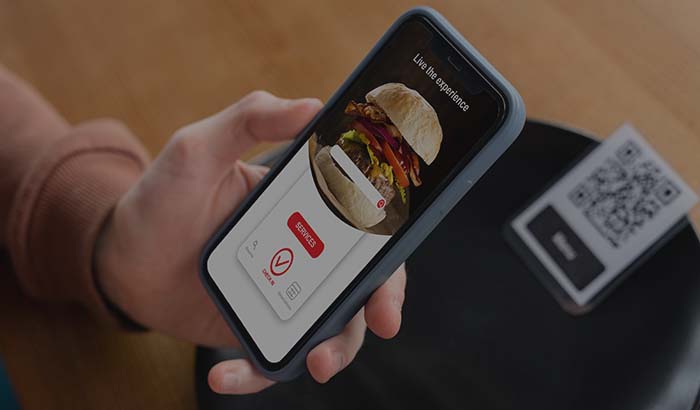
Modifier structure is vital for burgers. Variations like "medium rare, no onions, extra cheddar, spicy sauce" can all be selected clearly on the menu, the ticket that reaches the kitchen is error-free, and losses from returns, refires, and wrong orders drop. You use the same menu on your own site, at the table via QR, or on the pickup screen, and because it is managed from a single source, a price update reflects everywhere instantly.
Up-selling works on its own here. Prompts like "make your fries large +$2" or "add a milkshake to your meal" genuinely lift the average ticket. With online payments the customer is not hunting for cash at the door, payment is settled up front, and that removes the driver waiting at delivery and the whole change-making problem.
Fast order flow: every second from tap to plate
With burgers, serving them hot is everything. The moment a customer places an order on your own site, the ticket drops straight onto the kitchen display system (KDS). No printer paper, no handwriting, no lost slips. The grill team sees what to cook in color-coded form on the screen, a late order turns red, and prep time is tracked with a counter.
Treating delivery, pickup, and dine-in orders as separate channels is a mistake; they should merge into a single flow. In RestApp, delivery and pickup orders are listed on the same cloud POS screen, so during the rush there is no confusion about which one goes out first. The customer gets automatic notifications: "your order is being prepared / on its way / ready for pickup."
On the delivery side, control stays with you too. By defining delivery zones you set which neighborhood you serve, for what fee, and in how many minutes, so no driver is sent on a wasted trip to a far address. All of this speed is the most concrete reason a customer says "I'll order from here again."
The returning customer: in burgers, loyalty is repeat business
A burger is something people eat often; the same customer may order four to six times a month. That is exactly why loyalty is the highest-return investment a burger joint can make. With RestApp's loyalty and promotions module you build points on a "your 10th burger is on us" logic, send a coupon on a birthday, and fire off a "we miss you" discount to a customer who has not ordered in two weeks.
You can do none of this on a marketplace, because the customer belongs to the platform, not to you. On your own channel, the phone number, address, and order history pile up with every order. Which combo sells the most, which customer is most valuable, which hour is busiest; all of it shows clearly on the cloud reports screen, and you build your campaigns based on data.
Loyalty is not just discounting, it is creating a habit. If your app is on the customer's phone, they open it first when they crave a burger. On a marketplace app, your competitor's ad sits right next to you. Your own channel wins that competition from the start.
Cost and stock: protecting a thin margin with recipes
The sneakiest loss in a burger business is portion leakage. If the patty weight, cheese count, and sauce amount are not standardized, cost slips and the customer eats a different burger every time. With RestApp's approach to recipe and cost management you define the ingredients inside each product, and when a combo sells, the beef, bun, and fries are deducted from stock automatically.
This way, at the end of the week the answer to "how many patties did I sell, how many kilos of beef did I use, and do the two add up" is clear. Leaks like waste, comps, and staff meals become visible. When the price of beef rises you instantly see which product's margin is eroding and update the menu price accordingly.
Because all of this data is gathered in one place, you run the business by the numbers rather than by guesswork. With the cloud back office you can manage the menu, prices, stock, and branch even from your phone, and see the evening's revenue from home.
Setup and migration: moving to your own channel
Moving to your own commission-free channel does not mean shutting off the marketplace overnight. The smart path is to open your own site and app with RestApp and steer customers there gradually through QR menus, tabletop cards, and social media. Slipping a "15% off your next order, at this site" note into the bag for every customer who comes from the marketplace is the cheapest way to grow the commission-free channel.
A burger operator's advantage is a loyal, frequent crowd; once you move that crowd onto your own channel, the commission loss ends for good. To see the math of the migration concretely, our marketplace commission versus your own site comparison lays out a clear table.
You do not need a big investment to start, either. You can view the plans on the pricing page, try it for free without any risk, set up your menu, and take your first commission-free order the same day. To grasp the commission-free model from the ground up, the commission-free online ordering system guide is a good place to begin.
Key takeaways
- Burger margins are thin; the marketplace commission (15-35%) turns your best seller into your least profitable item, and your own commission-free channel stops that loss.
- Combo and modifier design (extra cheese, large fries, a drink) raises the average ticket; a digital menu makes this up-sell automatic.
- When the order drops straight onto the KDS, hot service and speed are preserved, and delivery, pickup, and dine-in merge into a single flow.
- Burgers are eaten often, so a loyalty program delivers the highest return through repeat business; customer data should stay with you, not the marketplace.
- Recipe and cost tracking stops portion leakage, and when the price of beef swings you protect the margin instantly.
Frequently asked questions
What do I gain by having my own online ordering system instead of a marketplace for my burger joint?+
The biggest gain is escaping commission. Marketplaces charge between 15% and 35%; on an $18 combo that can climb to several dollars per order. On your own commission-free channel that money stays with you, and the customer's phone number and order data become yours rather than the marketplace's.
How do I manage combos and extra options (cheese, sauce, fries size) in the system?+
In the digital menu you define modifier and extra groups for each main product. When the customer picks their burger, extra cheese, sauce choices, fries size, and drink options appear automatically. The selections go to the kitchen display error-free, reducing wrong orders and returns.
How do orders reach the kitchen, and do I need to use paper tickets?+
No. The moment an order comes in, it drops onto the kitchen display system (KDS) in color-coded form. A late order turns red, and prep time is tracked with a counter. Delivery, pickup, and dine-in orders all appear in the same flow, eliminating paper tickets and handwriting chaos.
Does a loyalty program really work for a burger joint?+
Yes, because a burger is eaten often and the same customer may order several times a month. Bringing customers back with points, coupons, and "we miss you" discounts means repeat business. Because the customer data stays with you, you can build these campaigns yourself.
Do I have to shut off the marketplace immediately when I move to my own channel?+
No. First you open your own site and app, then steer customers gradually onto your channel with QR menus and discount notes you slip into the bag. As your loyal crowd migrates, marketplace dependence and commission loss decline for good.
Stop paying commission on your orders
Launch your own commission-free online ordering system with RestApp.