

April 19, 2026
Online Food Ordering for Hotels: Room Service, QR Menus, and Multi-Outlet Sales
Picture a hotel: 120 rooms, two restaurants, a lobby bar, a pool deck, and a beach. The front desk phone keeps ringing for room service, a server roams the pool deck with a paper ticket in hand, and the evening restaurant is packed while the kitchen loses track of which order goes where. The cost of that disorder is clear: plates sent to the wrong place, room service that arrives late, consumption that never makes it onto the bill, and a falling guest rating at the end of it all. Hospitality is an industry where revenue gets lost in small details, and most of those losses happen in the food and beverage operation.
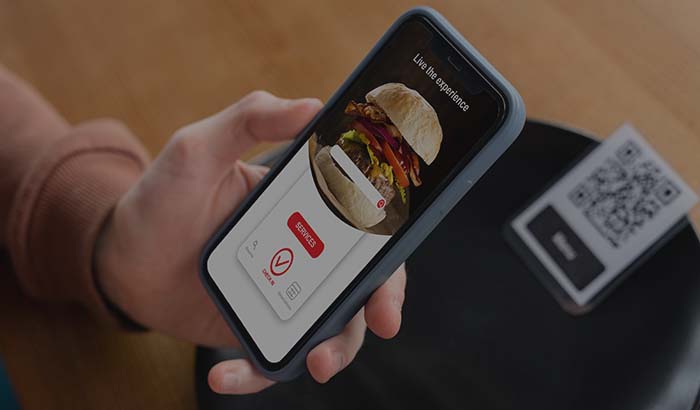
This is exactly where RestApp comes in. It connects every sales point in the hotel, meaning room service, the restaurant, the bar, the pool, and the beach, to a single commission-free online ordering and cloud POS order ticket system. A guest scans the QR code in the room, places an order through the QR e-menu, the order drops straight onto the relevant kitchen's kitchen display system (KDS), and the consumption posts to that room's bill the moment it happens. Instead of paying 15 to 35 percent commission to marketplaces like Uber Eats or Deliveroo, the hotel sells through its own channel commission-free.
In this article we explain how to digitize room service in your hotel, how to clear the language barrier with a QR menu, and how to run a multi-outlet food and beverage operation from a single dashboard. With RestApp's online food ordering solution built for hotels, you can grow both the guest experience and your food and beverage revenue.
The Real Pain of Hotel Food and Beverage Operations
Hotel managers know one thing well: the room rate is fixed and occupancy has a ceiling, but food and beverage revenue is an area you can actually grow. The problem is that in most hotels this area is run with paper tickets, room service taken over the phone, and disconnected restaurant registers. A guest has three cocktails by the pool, the server forgets to write the ticket or mixes up which lounger belongs to which room. Every drink lost at the end of the day is revenue leaking straight off the bottom line.
The second big pain is fragmentation. The front desk takes room service, the restaurant has its own register, the bar runs separately, the pool runs separately. What happens when these points do not talk to each other? A guest's total in-house consumption cannot be gathered onto a single bill at checkout, departmental reports do not add up, and it stays unclear which point earns how much. The manager ends up trying to make decisions without clean data in hand.
The third is the guest experience. A guest gets hungry in the room, finds the printed room service menu, picks up the phone, the front desk is busy, the order is half understood, and half an hour later the wrong plate arrives. Today's guest wants to pick up the phone and place an order in a few seconds. A hotel that cannot meet that expectation loses both the upsell and the high rating.
Moving Room Service to Commission-Free Online Ordering
Digitizing room service is the step where a hotel earns the fastest return. With RestApp you place a dedicated QR code in every room. The guest scans the code, sees the menu in their own language, fills the cart, and places the order. The order drops straight to the relevant kitchen along with the room number. Phone traffic, misunderstood orders, and the load on the front desk all disappear. At the center of this flow is the hotel's own branded commission-free online ordering channel.
The most critical benefit here is commission. If a hotel restaurant also runs delivery to the outside, it pays 15 to 35 percent commission on every order coming through a marketplace like Uber Eats or Deliveroo. On a typical ticket that can mean losing roughly a quarter of the total to the platform. With RestApp the same order comes in commission-free through the hotel's own delivery channel. A hotel restaurant doing 800 delivery orders a month saves a substantial sum every year by cutting out an average 25 percent commission.
On the room service side, orders post directly to the guest's room bill. The guest sees a single bill at checkout, and the hotel loses no consumption. With online payments, outside guests or walk-in users can pay instantly by card. To get the order-taking process off paper entirely, servers open a ticket on the spot at the table, the pool, or the beach using the tablet in their hand with the order taking app.
Ending the Language Barrier and Print Cost with a QR E-Menu
Hotels serve a tourist clientele, and that clientele is multilingual. Printing a separate menu for each language is both costly and an update nightmare. Did a price change, was a new dish added? You have to reprint thousands of menus. RestApp's QR e-menu solution ends this problem at its root. The guest scans the QR code and sees the menu in their own language based on their phone's language.

The second advantage of a digital menu is visuals and upselling. The guest sees a digital menu with photos, descriptions, and prices. A suggested wine next to a dessert, a starter recommended alongside a main course, all surface automatically. This visual layout noticeably raises the average ticket. Managing the menu is simple too: when you pull a product out of stock from the back office, it updates instantly across every point.
The third is flexibility. The poolside menu differs from the evening restaurant menu, and the breakfast menu is separate from the lunch menu. With RestApp you define a dedicated menu for each sales point and each time of day. When the guest scans the QR at the pool they see the pool menu, and when they scan the QR in their room they see the room service menu. This point-specific setup simplifies the hotel's operation and prevents confusion.
The Multi-Outlet Hotel: Restaurant, Bar, Pool, and Beach from One Dashboard
The hardest part of a hotel to manage is its multi-outlet structure. Two restaurants, a lobby bar, a pool bar, a beach, and room service. When all of these run on separate systems, management becomes impossible. RestApp unites all these points under a single cloud POS and order ticket system. Each point has its own ticket, its own kitchen, and its own report, but all of them are managed from one dashboard.
On the kitchen side, every order goes to the right point. A restaurant order drops onto the restaurant kitchen's kitchen display system (KDS), while a bar order goes to the bar's screen. Paper chits, lost orders, and the disconnect between kitchen and service all disappear. A finished plate is reported to the server instantly, and service speed goes up.
At the management level, the real value is in the reports. With cloud reports you see in real time which point sold how much, what time the rush hits, and which product earns the most. Thanks to the cloud back office, the hotel manager monitors the performance of every point from the office or their phone and makes menu and price changes from one place. Clean, department-level data is the foundation for growing food and beverage revenue.
Cost, Inventory, and Loyalty: Protecting and Growing Revenue
In a hotel food and beverage operation, profit is protected not through sales but through cost control. You cannot price correctly without knowing a cocktail's real cost or a main course's per-portion expense. With RestApp's recipe and cost management you define the ingredients inside each product, and stock is deducted automatically as sales happen. You see clearly how much waste there is at each point and which product is profitable and which is loss-making.
Inventory tracking is vital in a multi-outlet hotel. The bar store, the main kitchen store, and the pool store must each be tracked separately. Where a bottle of liquor left from and at which point it melted away must be traceable so revenue leakage closes. Because the system posts every sale to the relevant stock, the gap between the physical count and the system shows up immediately at the end of the day, and theft or shrinkage gets caught early.
To grow revenue, loyalty and promotions tools come into play. You can define campaigns specific to returning guests, point accumulation over the course of a stay, and discount coupons at certain points. For in-house events, gala dinners, or special evenings, you manage restaurant tables digitally with online reservation and bring clarity to your occupancy planning.
Switching to RestApp: Step-by-Step Setup in Your Hotel
The switch is less of a hassle than you might think. The first step is moving menus to digital and defining the sales points. The restaurant, bar, pool, beach, and room service are set up as separate points, and each gets its own menu and QR code. This setup is usually finished within a few days and works in harmony with the hotel's existing PMS structure.
The second step is getting staff used to the system. Servers learn the order taking app, the kitchen team starts working with the KDS, and the front desk tracks orders posted to room bills. Because RestApp's interface is clean, the training period is short. After a few shifts, the team will not miss paper tickets.
The third step is reading the results. From the very first month, commission savings, consumption that no longer goes missing, and a rising average ticket become visible in the reports. To test RestApp in your hotel you can start with a free trial, and you can review the plan that fits your needs on the pricing page. A properly set up system grows a hotel's food and beverage revenue in concrete terms.
Key takeaways
- Hotel food and beverage revenue is an area you can grow, but in most hotels it turns into revenue leakage because it is run with paper tickets and disconnected registers.
- Moving room service to a QR menu and commission-free online ordering ends phone traffic, cuts wrong orders, and posts consumption directly to the room bill.
- Hotel restaurants that run outside delivery save a substantial amount each year by selling commission-free through their own channel instead of paying the 15 to 35 percent commission charged by marketplaces like Uber Eats and Deliveroo.
- A multi-outlet structure of restaurant, bar, pool, and beach is run from a single cloud POS dashboard, and every order drops onto the right kitchen's KDS screen.
- Recipe-cost and inventory tracking close revenue leakage, while loyalty and online reservation tools grow food and beverage revenue.
Frequently asked questions
How is a hotel room service order taken with a QR menu?+
A dedicated QR code is placed in each room. The guest scans the code and places the order from the digital menu in their own language. The order drops straight onto the relevant kitchen's KDS screen along with the room number, and the consumption posts to that room's bill the moment it happens. Phone traffic and misunderstood orders disappear.
Can a hotel restaurant use its own commission-free channel instead of a marketplace?+
Yes. With RestApp the hotel takes delivery and pickup orders through its own branded ordering channel. The 15 to 35 percent commission paid to marketplaces disappears. A hotel restaurant with hundreds of orders a month keeps a substantial sum in its own pocket every year through these commission savings.
Can the restaurant, bar, and pool in a multi-outlet hotel be managed from a single system?+
Yes. The restaurant, bar, pool, beach, and room service are defined as separate sales points, but all of them are managed from a single cloud POS dashboard. Each point has its own menu, order ticket, and kitchen screen. The manager monitors the performance of every point in real time through cloud reports.
Does the QR menu work for multilingual guests?+
Yes. The digital menu automatically shows content based on the guest's phone language. The cost of printing a separate menu for each language and the hassle of updating it disappear. When a price or product change is made from the back office, it updates instantly across every point and every language.
Are room service orders posted to the guest's room bill automatically?+
Yes. When the guest orders from the room QR code, the consumption is written directly to the bill tied to the room number. At checkout, all in-house consumption is gathered onto a single bill. Outside or walk-in guests can pay instantly by card with online payments.
Stop paying commission on your orders
Launch your own commission-free online ordering system with RestApp.