

April 7, 2026
How to Lower Food Cost in a Restaurant: A Guide to Recipes, Inventory and Waste
The end of the month arrives, sales look fine, but there is no cash left in the till. That is the story for most restaurant owners. The problem usually hides not in sales but in food cost. If you set a price without knowing the real cost of the meat, cheese and oil that go into a plate, you may be losing money on every portion you sell without realizing it. The food cost percentage considered healthy in the industry is generally between 28 and 35 percent. Every point above that band comes straight out of your pocket.
There is no single magic trick for lowering food cost. It comes down to three pillars: knowing the true portion cost of every item, tracking where your inventory goes, and making waste visible. Trying to manage these three by hand, in a notebook, and on guesswork is close to impossible in busy operations. This is where a cloud POS and order ticket system that works hand in hand with recipe and cost management comes in.
In this article we will walk through how to bring your restaurant food cost percentage down step by step. We will move through concrete steps, from the recipe card to stock that depletes automatically with each sale, from waste records to menu engineering. On top of that, so you do not hand every cent you save back to marketplace commissions, you will see why your commission-free online ordering channel is part of this equation.
What Is Food Cost and Which Percentage Is Healthy?
Food cost is the ratio of the raw food ingredients used to prepare an item to that item's selling price. The formula is simple: divide portion cost by selling price and take the percentage. If you sell a plate that costs $6 to make for $20, your food cost percentage is 30 percent. For general restaurants, a band between 28 and 35 percent is considered healthy. The ratio can be much lower for pizza and beverages, and higher on menus weighted toward red meat and seafood.
What matters is not the percentage of a single plate, but keeping the average food cost percentage across the whole operation under control. Do not confuse two numbers here. Theoretical food cost is the cost you should have according to the recipe. Actual food cost is what you genuinely consumed, calculated as opening inventory plus purchases minus closing inventory. The gap between the two reveals your waste, spoilage and shrinkage.
You cannot lower food cost without seeing that gap, because you cannot fix a problem you cannot measure. Instead of doing a count at month-end and saying 'I think this month was worse,' tracking the gap between theoretical and actual cost numerically through cloud reports is the one point where you can actually intervene.
Calculate Recipe and Portion Cost Precisely
Everything starts with the recipe card. How many grams of beef, how many grams of fat, which spices and which sides go into a single burger? Without writing these down by weight, you will never know that plate's true cost. When you clarify the recipe, you gain two things: you work out the cost down to the cent, and you achieve portion consistency in the kitchen. The same plate goes out at the same weight every time, so both the customer experience and the cost are locked in.
Take a steakhouse as an example. Let's call it Anderson's Grill. Before entering recipes into the system, the owner assumed the cost per portion was around $4.50. When he weighed every ingredient and entered it into the recipe and cost management card, he saw the real cost was $6.20. That $1.70 difference was profit quietly disappearing on every plate. He closed the gap simply by standardizing the meat portion and switching suppliers for two items.
Because raw material prices change constantly, recipe cost has to be dynamic too. When the price of ground beef goes up, the cost of every plate that depends on it should update automatically. In RestApp's cloud back office structure, when you update a purchase price, the current food cost of every recipe containing that ingredient is instantly recalculated. That way you stay aware of price increases and never fall behind.
Automate Stock Depletion With Sales
Knowing the recipe alone is not enough. The raw materials for every portion sold need to be deducted from stock automatically. In the classic method, the kitchen sends out a plate, but no one knows in real time how much meat, cheese or onion was used from the storeroom. The shortfall that surfaces at the month-end count is information that arrives too late. In a recipe-defined system, the moment a burger is sold through the order ticket and cloud POS, 180 grams of beef, 20 grams of oil and the sides are deducted from stock.
This automatic depletion gives you live stock visibility. You see which ingredient is about to run out, and how much was consumed at which hour of which day. You get alerts for items dropping to a critical stock level and order the right quantity from your supplier at the right time. Tying up cash in excess stock, throwing out expired products and overpaying on panic purchases all become less of a problem.
The strongest part of automatic stock depletion is that it exposes the gap between theoretical and actual consumption. The system says 'according to the recipe, 40 kilos of beef should have been used this month,' and if 47 kilos went missing at the count, those extra 7 kilos are a problem: oversized portions, prep errors, spoilage or loss. Cloud reports lay this gap out item by item and tell you where to look.
Make Waste and Spoilage Visible
A significant share of the food lost in a restaurant happens not in sales, but in the unseen corners of the kitchen. A burnt plate, meat dropped on the floor, stale bread, over-trimming during prep, the complimentary dish sent to a guest, the staff meal. None of these are recorded as sales, but they all push your food cost up. You cannot manage what you cannot see, so the first job is to record these line items.
The practical solution is to log waste and spoilage items in the system too. When a spoiled crate of tomatoes, three burnt plates or broken dishes are recorded as waste, you see their combined impact in the month-end cost analysis. Most operators are surprised the first time they see this figure, because losses they assumed were small add up to a serious amount over a month. Waste that is recorded is waste that can be discussed and reduced.
Another dimension of cutting waste is preventing overproduction. When the kitchen sees its orders clearly, unnecessary early prep and plates that sit and go cold are reduced. The kitchen display system (KDS) sends orders digitally from the ticket to the kitchen, so it is clear which plate goes out when. Misread orders, remade plates and the raw material waste that comes with them drop noticeably.
Use Menu Engineering to Highlight Profitable Items
Lowering food cost is not only about cutting expenses; it is about designing your menu more intelligently. Menu engineering evaluates each item on two axes: how much it sells and how much profit it leaves. If an item sells a lot but has low profit, you either optimize its recipe or pair it with a high-profit item through cross-selling. Items that sell little but carry high profit you move to a more visible spot on the menu.
To do this you need to know how much each item sells and its real profit. Cloud reports combine sales counts with recipe cost to produce each item's contribution margin. That way you tell apart the 'best seller' from the 'biggest earner.' These are often different items, and redesigning the menu with this data can pull the average food cost down by several points at once.
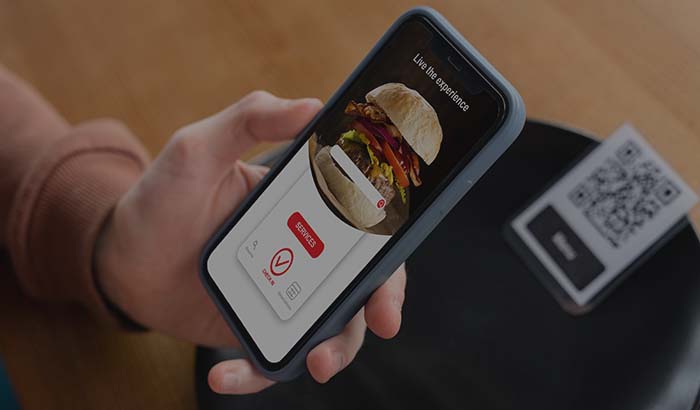

A digital menu is a powerful lever here. Changing prices and content in a printed menu is expensive and slow. With a QR menu and digital menu, you highlight profitable items, update prices instantly according to season and cost, and quickly pull a low-profit item. Cost management is not a static spreadsheet; it is a living process that needs constant adjustment.
Keep What You Earn With a Commission-Free Channel
Spending months pulling food cost from 35 percent down to 30 percent and then handing that profit to marketplace commissions is the most common mistake. Platforms like Uber Eats and Deliveroo take roughly 15 to 35 percent commission per order. If you cut five points of cost in the kitchen while paying thirty points of commission on the delivery channel, that is where the real leak is. Cost management is done not only in the kitchen but in the sales channel too.
The solution is not to abandon marketplaces entirely, but to build your own commission-free channel alongside them. With commission-free online ordering you get your own branded ordering site and app, the customer orders directly from you, and no commission is taken from the middle. As you gradually move your regular customers to your own channel, you make the same revenue at a much higher profit. Whether you run a restaurant or another type of business, the logic is the same.
On your own channel, the customer data stays with you. With loyalty and promotion tools you encourage repeat orders and run the right campaign for the right item. When you turn the cost advantage you earned in the kitchen into sales on a commission-free channel, your food cost reduction effort finally pays off in full. To try the system you can start for free and see the difference with your own numbers.
Key takeaways
- A food cost percentage between 28 and 35 percent is generally healthy; the gap between theoretical and actual cost reveals your waste and shrinkage.
- You cannot know the true portion cost without producing a weighted recipe card for every item; a rise in raw material prices should flow into the recipe automatically.
- Automatic stock depletion integrated with sales gives live stock visibility and exposes the theoretical-versus-actual consumption gap for every item.
- You cannot manage waste without recording spoilage, loss and complimentary items; a KDS reduces waste from misread orders and remakes.
- Turning the cost advantage you earned in the kitchen into sales on your own commission-free ordering channel is the real way to keep the profit in your pocket.
Frequently asked questions
What should the ideal food cost percentage be in a restaurant?+
For general restaurants, a band between 28 and 35 percent is considered healthy. The ratio can be lower for pizza and beverages, and higher on menus weighted toward red meat and seafood. What matters is keeping the average percentage across the whole operation under control, not the percentage of a single plate.
How do I calculate portion cost?+
You produce a weighted recipe for each plate and add up the cost of all the raw materials that go into it at their current purchase prices. Dividing this cost by the selling price and taking the percentage gives you the food cost percentage. A recipe and cost management module automatically updates the cost of all related recipes when a raw material price changes.
Why is automatic depletion necessary instead of tracking stock by hand?+
With manual tracking, you only see how much raw material was used at the month-end count, which is far too late. In a recipe-defined cloud POS, the ingredients for every portion sold are deducted from stock in real time; you get live stock visibility, critical-level alerts and the theoretical-versus-actual consumption gap instantly.
How do I reduce waste and spoilage?+
First you make spoiled, burnt, broken and complimentary items visible by recording them as waste in the system. Waste that becomes visible can be discussed and reduced. With a kitchen display system (KDS), the raw material waste arising from misread orders and remakes also drops noticeably.
How do I protect profit after lowering food cost?+
You need to avoid handing the cost advantage you earned in the kitchen back to marketplace commissions. Platforms like Uber Eats and Deliveroo take roughly 15 to 35 percent commission. As you set up your own commission-free online ordering channel and move regular customers there, you make the same revenue at a much higher profit.
Stop paying commission on your orders
Launch your own commission-free online ordering system with RestApp.