


January 27, 2026
Delivery Zones Are a Pricing Decision, Not a Circle on a Map
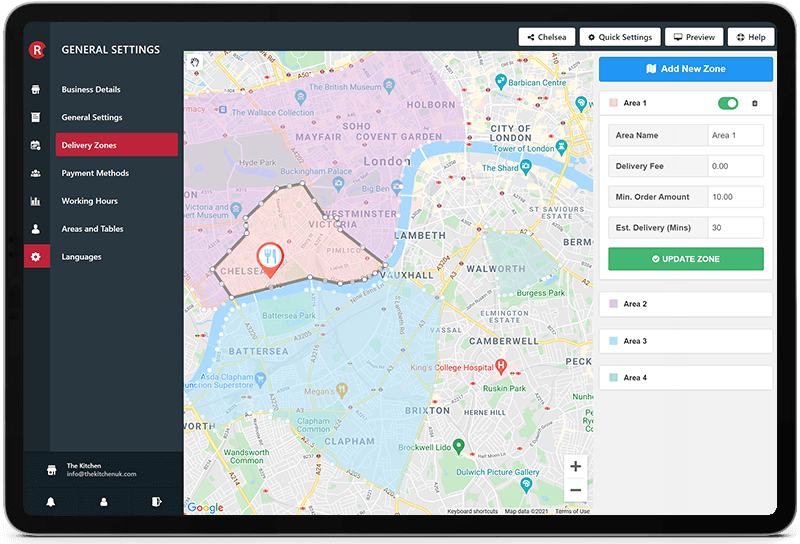
Most delivery zones are drawn once, generously, on launch day: a big optimistic circle around the kitchen. Then physics takes over: the far orders arrive late and lukewarm, the reviews mention it, and the driver spends forty minutes on a £14 order. The circle was a marketing decision. It should have been a pricing one.
Distance is a cost; charge for it like one
A delivery three streets away and a delivery across the river are different products. Zone-based settings let you treat them that way: the inner zone cheap and fast, the middle zone with a fair fee, the outer zone with a higher minimum order that makes the trip worth sending a driver on. Customers accept this far more readily than owners expect; they live with distance pricing in every taxi app on their phone.
The minimum order is your margin's seatbelt
Small orders to far places are where delivery economics go to die. A higher minimum on the outer ring doesn't reject those customers; it nudges them to add the drinks and the dessert that make the order viable. The order gets bigger or it doesn't happen. Both outcomes beat losing money politely.
Draw around streets, not radii
A pure radius ignores rivers, railways, one-way systems and that one junction that eats fifteen minutes at dinnertime. Real zones follow real geography. If your drivers groan when a certain neighbourhood pops up, that neighbourhood is telling you where the boundary is.
Quality has a range, too
Some food simply doesn't survive thirty-five minutes in a box, and every late, soggy delivery is reviewed as if the kitchen failed. Shrinking the zone for the dishes that travel badly (or building a tighter menu for the outer ring) protects the reputation that the dining room spent years earning.
Revisit quarterly
Zones aren't a setting; they're a lever. New housing, a new bridge, a rival closing, winter. All of it changes the maths. A fifteen-minute quarterly review against the actual numbers (average ticket and delivery time by zone, if your reports break them out) keeps the map honest.
The point isn't delivering everywhere. It's that every delivery you do send should be worth the trip: for the customer, for the driver and for the till.
Stop paying commission on your orders
Launch your own commission-free online ordering system with RestApp.